Webhook Architecture for Real-Time Marketing Triggers
Event-driven webhooks replace batch polling to match how customers actually behave.
Webhook Architecture for Real-Time Marketing Triggers.
Why marketing's timing problem is structural, not tactical
Marketing automation runs on a scheduling problem it inherited decades ago, built on the assumption that checking in periodically was sufficient. Campaigns fire at fixed times, CRM syncs run overnight, segment membership recalculates on a lag, all because the architecture was built for a world where checking in periodically was the only option. The result applies a batch mentality to customer behavior that happens continuously and unpredictably, the moment someone abandons a cart or crosses a usage threshold or opens a support ticket.
The waste this creates is measurable. Zapier's analysis of 30 million requests found that only 1.5% of polls actually turned up an update, meaning 98.5% of those checks burned compute and network resources to confirm that nothing had changed. That's a substantial share of wasted compute and network resources, not a rounding error. That's a system built to ask the same question over and over, almost always getting the same answer, and paying the infrastructure cost anyway.
Customer expectations have moved faster than the infrastructure has. The window during which a behavioral event is still relevant enough to act on now gets measured in minutes, not in however long it takes for the next scheduled batch to run. A cart-abandonment email that lands six hours late reads as an afterthought. An upgrade prompt that arrives after a user has already downgraded or churned isn't a missed opportunity, it is a small insult. A welcome sequence firing on day three, after the customer has already hit a wall with the product and filed a support ticket, tells the customer the company wasn't paying attention.
None of this is a tactical failure of copywriting or send-time optimization. The plumbing underneath most marketing stacks was designed for periodic requests, and periodic requests cannot keep pace with continuous behavioral events. Fixing the copy doesn't fix the plumbing.
Webhooks and the push model
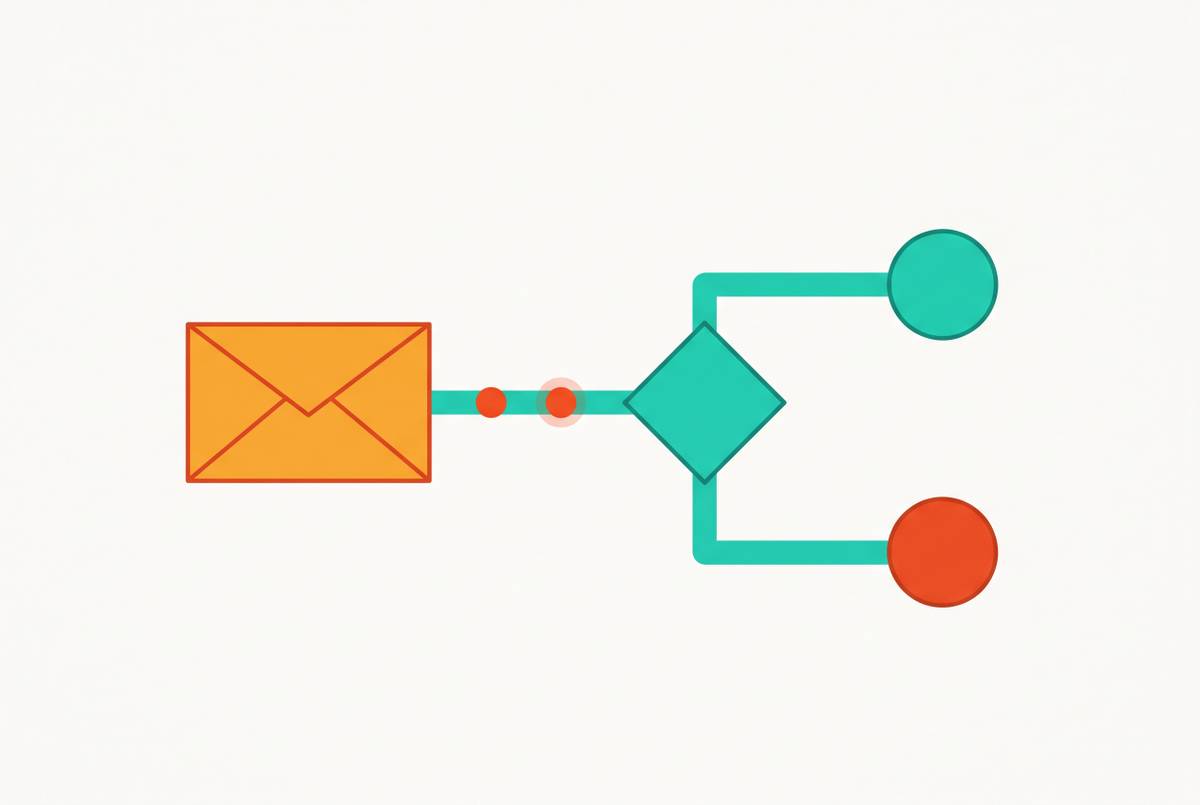
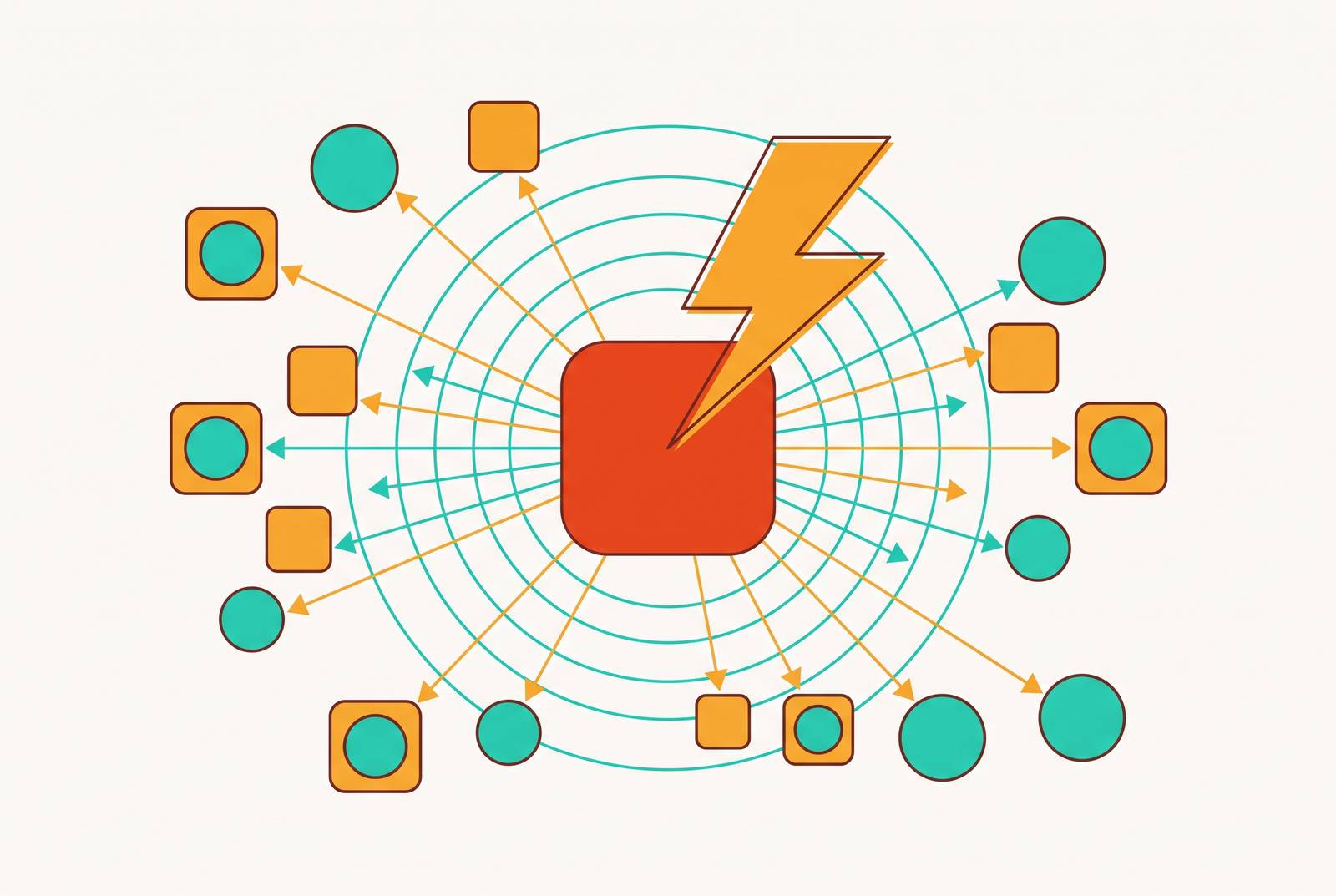
A webhook is an HTTP callback: a push-based, event-driven notification that one system sends to another the instant a specified event happens, with no request required to trigger it. That inversion, from asking to being told, is the entire idea.
The distinction is easiest to hold onto with a physical comparison. Polling is a stockroom employee walking back to check for deliveries every five minutes, whether or not anything arrived. A webhook is a doorbell. The delivery shows up, the bell rings, and the employee responds right then, with no wasted trips in between.
Three parts make the mechanism work. An event trigger is the action inside the source system that sets everything in motion, a new signup, an order shipping, a usage threshold getting crossed. The payload is the data packet, usually JSON, that rides inside the POST request body and carries the specific context of that event, a customer ID, order details, a timestamp. And the callback URL is the address in the receiving system that's registered to accept and process that payload.
Direction matters here more than it might first appear. Webhooks are one-way: the source system pushes, and it controls when that push happens. APIs, by contrast, are two-way, request and response, with the consumer initiating the exchange. That's why the term "reverse API," while common, undersells what's actually going on. Webhooks don't replace APIs; they complement them, and most well-built architectures lean on both.
The gap between what webhooks offer and what teams actually use is wide enough to be the market's defining blind spot right now. Awareness has lagged well behind the infrastructure's actual maturity. Only 9% of survey respondents in Customer.io's Customer Messaging Report reported using webhooks or API-driven messages (the lowest of any channel tracked), yet webhook volume grew 2–3x year-over-year on their platform, and the gap between awareness and actual use is the market's main blind spot.
The marketing trigger library: which customer events should fire a webhook
Before a single line of integration code gets written, a team has to decide which customer actions actually carry enough commercial weight to justify an instant response. That's a judgment call, not a technical one, and it's where most webhook projects either earn their keep or turn into noise.
Some categories carry obvious urgency. High-intent purchase signals, an order placed, a payment failing, a checkout abandoned mid-flow, sit at the top because money is directly on the line. Lifecycle inflection points follow close behind, including a trial starting, a plan upgrade or downgrade, and a churn signal surfacing. Usage and engagement events matter too, a customer crossing 80% of their plan limit, adopting a feature for the first time, or going quiet after a long login gap aidigital.com. Support and satisfaction events, a ticket opening or resolving, an NPS survey firing right after an interaction, round out the list, alongside content and product signals like a blog post going live through the CMS or a video crossing a view milestone.
The usage-milestone pattern shows the model at its cleanest. When a user crosses 80% of their plan limit, a webhook fires, and Customer.io's system sends a personalized upgrade prompt at the exact moment that user is statistically most likely to act on it aidigital.com. The trigger there is a commercial moment the customer just created, not a date some marketer picked off a calendar weeks earlier.
Not every event deserves this treatment, though, and that filter matters as much as the trigger list itself. The test is simple: does acting within minutes actually change the outcome? If a two-day delay would produce the same result as an instant response, wiring up a webhook for it is wasted engineering effort. Most teams don't start from a blank list, either. Customer.io's own guidance is to audit which events are already firing inside the product that nobody's acting on yet, because that gap, not some hypothetical new instrumentation, is usually where the fastest wins sit.
How a webhook payload moves through a production marketing stack
Following a single event end to end makes the architecture concrete. Take order fulfillment as the example: an e-commerce platform like Shopify or WooCommerce fires the fulfillment event and POSTs a JSON payload to the registered callback URL.
The receiver's first job is to acknowledge fast, an HTTP 200 sent back immediately, because a slow response tells the sending system the delivery failed, which triggers a retry and starts compounding problems that didn't need to exist. That acknowledgment is not the same thing as doing the work. The payload gets handed off to a queue for processing outside the request cycle entirely, so the receiver isn't sitting there computing anything inline.
From the queue, a worker picks up the event, checks the payload against an expected schema, and confirms the event ID hasn't been seen before, the idempotency check. A well-built worker doesn't stop there either. It goes back to the source system's API and fetches the current state of the object rather than trusting the payload's snapshot as gospel, because the payload is a trigger telling you something changed, not a reliable record of what the current truth actually is.
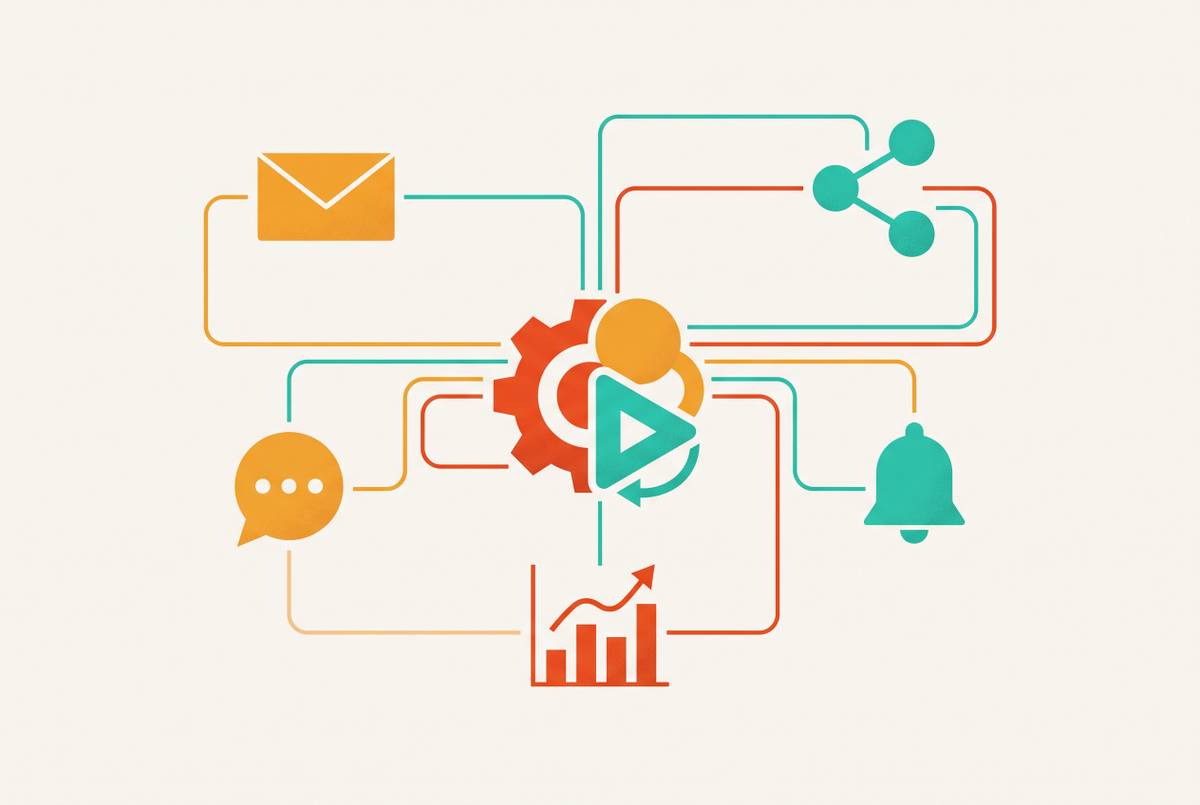
The real payoff of this design is decoupling. The payment processor, or the CMS, or whatever backend fired the original event, never needs to know anything about the internal business logic downstream, a single event can fan out into several independent workflows running at once without any of them blocking each other. That's also why no-code orchestration tools like Zapier, n8n, and Make have built entire businesses around webhooks as connective tissue, letting teams wire multi-step workflows for standard use cases without writing custom integration code.
The CNCF's CloudEvents spec standardizes envelope fields like id, source, type, and time across producers, so a webhook payload looks predictable no matter which system generated it. Adopting that spec is what makes webhooks interoperable with major iPaaS platforms and event grids instead of every integration needing its own custom parser.
The six failure modes that silently break marketing automations
The stakes for getting this wrong have gone up, not down. API downtime rose 60% between the first quarter of 2024 and the first quarter of 2025, which means webhook-dependent marketing automations are sitting on less stable ground than they were even two years ago houseofmartech.com.
Six distinct failure types account for most of the breakage, and each one has its own marketing-shaped consequence. Missing events are the simplest to describe and the hardest to notice: the payload never arrives, so the post-purchase email never fires, or a churn signal never reaches the account team who needed to see it. Duplicate events are the opposite problem, the same event firing twice, so a customer gets two "thank you" emails, two charge attempts hit their card, or a CRM ends up with duplicate records. Timeouts happen when the receiver takes too long to answer, at which point the sender assumes failure and retries, which often just produces more duplicates. Out-of-order delivery is subtler still: a "plan cancelled" event arriving before the "plan upgraded" event that preceded it can send an automation down the wrong branch entirely. Partial payloads, malformed or truncated data, leave personalization fields empty and cause downstream systems to fail quietly. And authentication failures, an unverified sender, either let legitimate events get rejected or let a malicious payload in the door.
What ties all six together is that they're silent. No alert fires and no dashboard turns red; the automation just doesn't run, and the gap usually becomes visible only when a customer complains or somebody notices a revenue report doesn't add up. The financial version of this is concrete: one missing idempotency check can generate hundreds of dollars in duplicate API calls before anyone notices it come Monday morning. That is not an abstract engineering concern, it is a line item.
Each of these six failure types needs its own fix. There is no single catch-all patch that closes all six at once.
Building a resilient webhook receiver: the architectural fixes that matter
Reliable webhook infrastructure stopped being about just sending a POST request a while back. It's now about designing a pipeline that's resilient, observable, and secure enough to survive the internet's basic unpredictability.
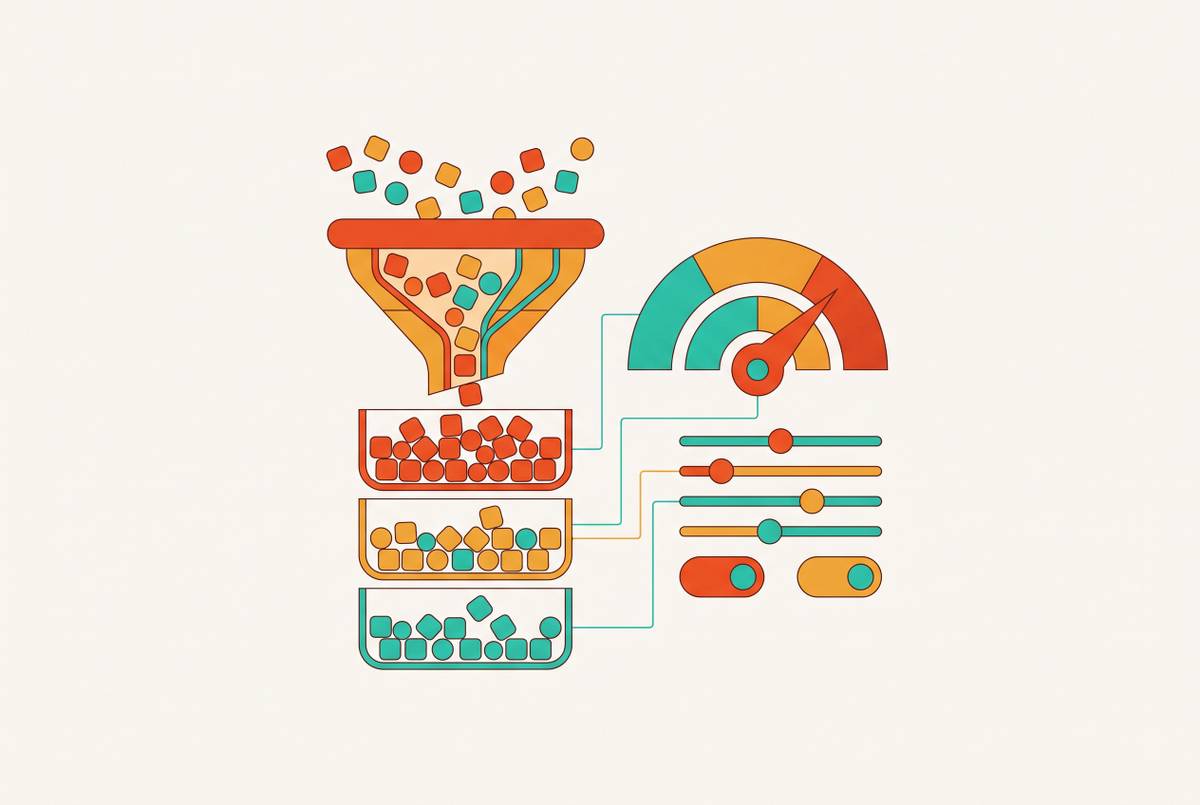
Against missing events, the fix is queue-first processing: never handle the event inline, enqueue it and return the 200 immediately, and keep a dead-letter queue around to catch anything that fails so it can be inspected and replayed later rather than lost. Against duplicates, idempotency keys are non-negotiable, every receiver needs to check whether it has already processed an incoming event ID before it acts on it again, because duplicates will happen no matter how reliable the sender claims to be. Against timeouts, the async acknowledgment pattern separates the fast part, an instant 200, from the slow part, the actual processing that happens later in a worker, and no meaningful work should ever run inside the request handler itself.
Authentication deserves its own weight class. HMAC-SHA256 signature verification, using a shared secret key to confirm every incoming webhook actually came from who it claims to, is the baseline. An unsecured endpoint is a real security risk, and no webhook should be trusted without that verification step.
Retries need a strategy too, exponential backoff with jitter for anything transient, which is exactly the pattern Stripe, GitHub, and Shopify now ship by default, complete with visible retry histories in their dashboards. Any consumer building against these systems should expect retries as a matter of course and design its idempotency checks accordingly.
The single most valuable habit in this entire stack might be the simplest to state: treat the webhook as a trigger, not a source of truth. On receipt, go fetch the object's current state from the provider's own API rather than trusting that the event payload still reflects reality by the time it's processed. That one pattern wipes out a large class of stale-data bugs that otherwise appear as mysterious personalization errors weeks later.
None of this holds together without observability. Every event ingested, every processing failure, every retry needs to get logged against its event ID, because without that trail, failures stay invisible until a customer or a revenue report reveals them.
Personalization at scale: how webhooks power real-time segmentation and messaging
Real-time personalization rests on a Customer Data Platform at its core, which pulls first-party data together from web, mobile, CRM, email, and offline sales into one unified customer profile, and resolves identity consistently across all of it. Without that unification, there's no coherent "customer" for a personalization engine to act on in the first place.
CDP adoption is on track to become close to universal infrastructure: by 2026, roughly 80% of enterprises are expected to have adopted one as essential infrastructure for unified customer context, and CDPs implemented well can lift marketing efficiency and engagement by as much as 30% aidigital.com. Webhooks are what keep that infrastructure honest. They're the update mechanism, pushing behavioral events into the CDP the moment they happen, so the unified profile stays current instead of reflecting whatever was true at last night's batch sync. Strip the real-time event ingestion out, and a CDP is just a slower, more expensive CRM.
Three patterns show what this looks like in production. A webhook fires at 80% of plan usage, the CDP updates the profile, and the messaging platform sends a personalized upgrade prompt timed to land at the moment it's most likely to convert aidigital.com. A churn event fires, the CDP pulls that customer out of active nurture sequences, the CRM gets notified, and the account team gets an alert in Slack, all of it happening before anyone has manually opened a single tool. A user completes their first key action in the product, a webhook fires, the profile updates, the user advances to the next onboarding stage, and the customer success manager gets notified.
There's an AI layer sitting on top of all this now too. It's worth being precise about what webhooks actually are in this picture. They're the infrastructure that makes those existing channels sharper, because the profile driving the personalization is accurate and current rather than because some new delivery mechanism got bolted on.
This architecture also happens to be pointed in the direction privacy regulation is heading. Stricter rules and rising consumer expectations are pushing brands toward zero- and first-party data and consent-based personalization, and a webhook-driven CDP built on first-party behavioral events fits that direction structurally, not as an afterthought bolted on for compliance. There are three concrete personalization patterns to develop.
Webhook-driven social publishing: turning product and content events into distributed content
Most webhook pipelines end their journey at a database write or a Slack ping. By 2026, the same event-driven architecture has stretched further, driving entire social publishing operations autonomously and at scale, with no marketing manager sitting in a dashboard queuing up posts by hand.
The economics behind this shift involve rate limits as much as speed. Social platforms including Instagram, LinkedIn, TikTok, and X cap how many API calls an integration can make per hour or per day, and polling those platforms for inbound events burns through that quota even on the calls that return nothing new. Switching to webhook-triggered publishing frees that same budget for the calls that actually matter, the outbound publishing itself.
One production pattern shows the model clearly. An order ships through Shopify or WooCommerce, firing a fulfillment event that a listener catches immediately. An AI agent drafts a platform-optimized post from that event, and it publishes while the customer is still excited about the order, not 48 hours later. That's the same doorbell logic from the marketing trigger library, just pointed outward at a public channel instead of inward at a CRM record. According to aidelly.ai, there are four production patterns to name concretely.