Zero-Click Search Impact on Traffic-Based Marketing Metrics
Brands now win through AI citations even without clicks, requiring new metrics beyond traffic.
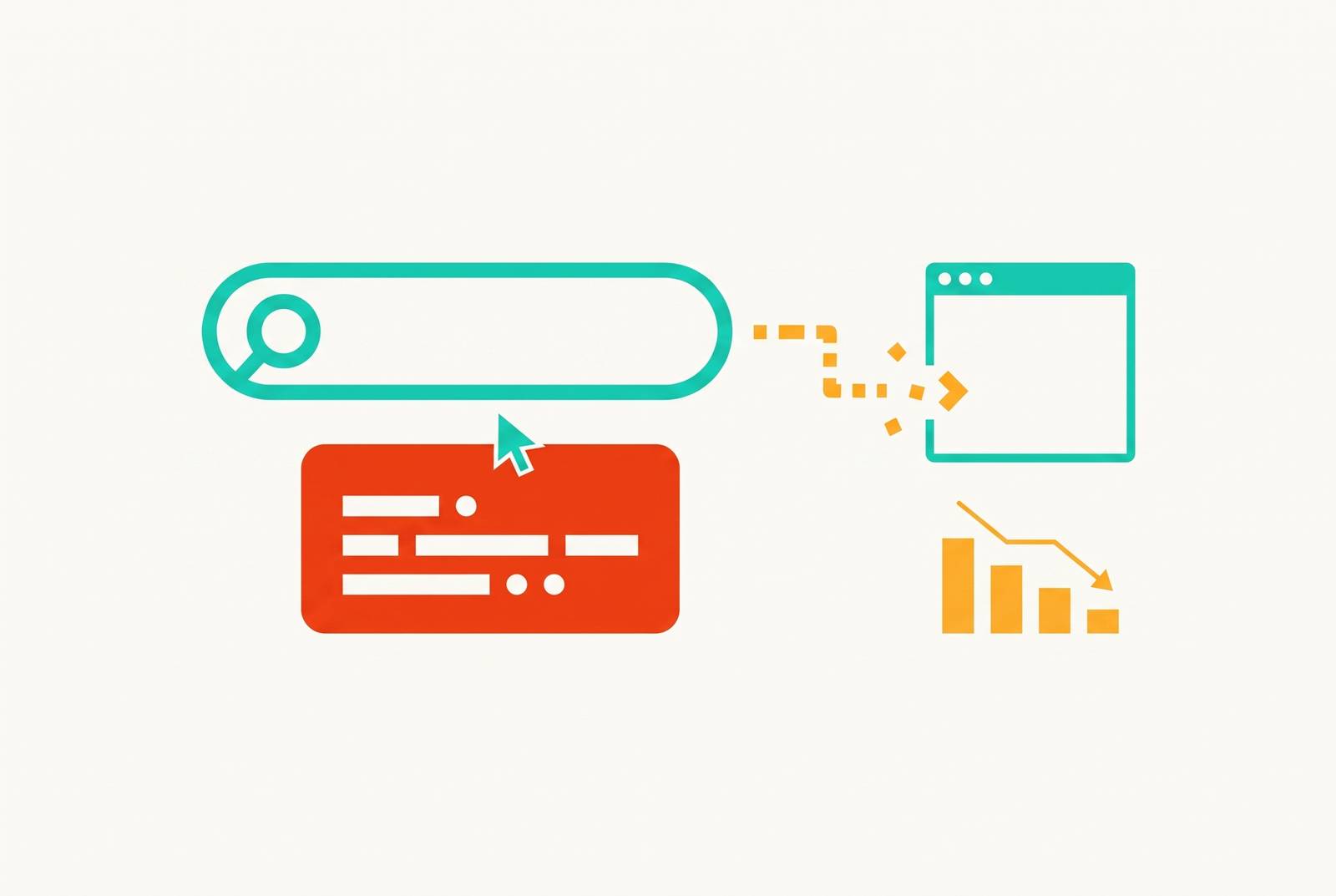
With zero-click search, traffic tells only part of the story of how marketing performs because a brand can sway a buyer without getting a visit. Competitive AI visibility benchmarking fills that gap by comparing which brands AI assistants name for the same customer questions, how they describe them, and whom they recommend instead. Citation frequency, brand impressions, and branded search demand belong beside sessions and clicks.
Why traffic metrics stopped measuring search influence
Similarweb reports that a substantial share of searches end without a click to an external website, a paid result, or even a Google-owned property. Sessions, organic visits, and click-through rate were built to track the journey from a search result to a website. Most searches now stop before that journey begins. The dashboard still counts arrivals, but it cannot explain everyone who stayed at the station.
Ahrefs’ ongoing tracker found that Google’s share of traffic fell substantially in a single year across a large sample of sites. That included properties with full-time SEO teams, so neglect is not an adequate explanation. Traffic remains useful for measuring visits and what visitors do next. It is no longer a sufficient proxy for search influence. The missing measurement is exposure that shapes a user’s understanding or preference without producing a click.
What is actually suppressing the clicks: AI Overviews and AI Mode
AI Overviews put the answer on the results page. The interface gives users an AI-generated response where they are already looking, so they do not have to go elsewhere to piece together an explanation. That removes a reason to visit the source. Earlier search features also answered questions directly, but AI Overviews extend that behavior and suppress clicks more strongly. A page can supply useful information while losing the visit that once followed.
AI Mode takes this further by putting the AI answer at the heart of the search experience. The interface changes where the user gets value. This is not a penalty reserved for thin content, weak optimization, or pages that forgot to appease the SEO gods. Good content can also answer a question so completely through an AI interface that the user has no reason to leave it. Because the redirection happens in the product itself, waiting for traffic to recover does not address the measurement problem.
Who gets hurt most and where the damage actually shows up
Ad-monetized publishers face the most direct financial exposure. Without a page view, there is no on-site ad impression and no associated advertising revenue. For them, the missing visit is not merely an awkward chart in a monthly report. It removes the event their business monetizes. Informational content that an AI answer can summarize is especially exposed because its value can reach the reader without the reader reaching the page.
Brands that sell through website conversions face a different loss. Missing sessions remove opportunities to turn visitors into leads or purchases, but visit volume alone does not describe the quality of the opportunities that remain. Adobe’s retail data shows that AI-referred traffic can lead to conversions at a higher rate than non-AI traffic. Fewer visitors need not mean weaker intent. That distinction prevents a traffic decline from becoming a complete verdict on AI search and identifies citation as a commercial opportunity.
The citation paradox: brands inside AI Overviews actually gain
Seer Interactive found that brands cited in AI Overviews earned more organic and paid clicks than brands not cited on those queries. Its comparison shows that citation helps, but it does not show that citation always beats holding the first organic position. Being named inside the answer is a different competitive position from appearing only among the links around it. The citation is not a participation trophy.
The mechanism also reaches beyond the citation link. A brand named authoritatively in an AI answer gains a trust association that can lead to later branded searches or direct navigation. The user does not need to click immediately for that exposure to shape the next step. As a result, an uncited brand and a cited brand can show similar immediate traffic while occupying different positions in the buyer’s mind. Winning now includes becoming both the page the system ranks and the brand it names when it answers.
Why click-based analytics cannot see citation value or brand impression
Google Analytics records no website session when someone sees a brand cited in an AI Overview and does not click through. The exposure happens outside its view of website behavior. Its on-site measurement scope places that brand impression and the trust association beyond what it can log. A turnstile is good at counting who comes in, but it makes a poor opinion poll.
A later visit can make the blind spot harder to notice. Direct navigation or branded search may leave activity that can be measured without showing the earlier AI mention that helped bring it about. The session exists, but the path to it remains incomplete. Even more exact click reports cannot, on their own, show an exposure that happened elsewhere. Citation frequency, share of voice in AI answers, and branded search volume need data of their own because another filter on the same traffic report cannot show those exposures.
What signals show which competitors AI assistants recommend instead of your brand?
The AI citation layer measures whether a brand enters the answer at all. Citation frequency tracks how often it appears as a source across target query categories, while share of voice compares its presence with competing brands. Accuracy and favorability then establish whether the appearance helps, since a mention is not automatically a recommendation. Cross-model consistency compares how Google, ChatGPT, and Perplexity present the same brand.
The search-results layer tracks where a brand is seen beyond AI citations. SERP real estate is the percentage of visible screen area occupied by brand mentions, featured snippets, knowledge panels, and People Also Ask answers. It captures presence without requiring a visit. This complements the citation layer because a brand can occupy useful space on the results page without becoming a source in the generated answer. Both belong in an exposure scorecard, but they describe different placements.
The demand layer links that exposure to signs that people want to buy. Branded search volume shows whether people are looking for the company itself, while assisted conversions are purchases or leads that came after search-results exposure without a direct referral click. Attribution is the difficult part here. An impression cannot get credit just because a conversion came after it, and a later branded search does not prove which earlier mention led to it. These distinct signals become more informative together.
How AI systems decide which brands to cite — and what that means for measurement
AI citation selection relies on corroborated evidence, particularly from trusted third-party sources. Even strong SEO does not ensure that AI will mention a brand. A company’s own claims generally weigh less than outside corroboration, although owned content can earn direct citations for product-functionality and factual questions. The measurement boundary must extend beyond the website. News coverage, review platforms, forums, and expert mentions are part of the evidence ecosystem that supports citation.
The relevant credibility signals include citation quality in both base-model and retrieval contexts, complete schema, and named experts with verifiable credentials. Original research on structured landing pages, specific outcome-oriented reviews, and proprietary framework terminology cited externally add further support. Technical structure is necessary but not sufficient. FAQPage, HowTo, Speakable, and Person schema can make information legible, but markup cannot supply the independent corroboration a brand lacks. An empty cupboard with perfect labels still has little to offer for dinner.
What marketers should change in how they report and optimize for search
Start by changing the reporting, before overhauling the content. Add citation frequency, branded search volume, and AI-answer share of voice alongside the traffic metrics already in use. Keep sessions and conversions visible because they still measure real website activity. Then compare exposure, demand, and visits rather than letting one declining line stand in for all three. The transition is additive before any metric loses its place.
Before expecting changes to content to earn trust, build the authority infrastructure step by step. Start with HTTPS and Core Web Vitals as the technical foundation, then address consistent NAP data, meaning name, address, and phone details. Structured data on About and Contact pages comes next, followed by author authentication through verifiable credential chains. Each layer supports the next. This work establishes a foundation rather than guaranteeing that an AI system will recommend the business.
Content work should then serve both citation and reasons to visit. Direct answers near the top of a page, logical heading hierarchies, and FAQ schema give AI systems extractable units while helping readers find the point. Interactive tools, proprietary data, original research with methodology, and community-generated content offer value that a summary cannot fully replace. The aim is not to make useful information harder to extract.
Outside the site, build topically relevant mentions in editorially trusted publications, including mentions without links. That differs from traditional link-building because the evidence of authority is not limited to a clickable backlink. Regularly ask AI systems the questions prospective customers would ask, then compare brand accuracy, favorability, consistency, and competing recommendations. This is perception intelligence in practice. It turns “Does AI know the brand?” into a repeatable comparison.
Evident’s perception intelligence platform scores across 400+ signals that cover how algorithms, AI, and people judge a business. It is built to measure where a business’s pages rank and how systems represent and recommend it. Manual AI-answer audits and Google Search Console can also measure parts of how a brand is seen. They answer narrower questions without requiring the entire framework at once. The choice depends on how much of the brand’s perception needs to be measured together.
Choosing what to measure first when you cannot measure everything at once
Start with branded search volume in Google Search Console. It is already available, correlates with downstream revenue in a zero-click environment, and helps reveal whether search exposure is building demand despite fewer visits. It provides a starting signal, with causation still to be established. Add citation frequency next by manually checking whether the brand appears in AI Overviews for the queries most central to its category. That produces an immediate diagnostic without buying a new tool.
Then compare answers from three or four major AI systems using the same customer-intent questions. Record which competitors appear instead of the brand, as well as whether descriptions are accurate, favorable, and consistent. Absence or inconsistency points toward third-party authority work as the priority. Keep the comparison tied to customer questions. A recommendation for an irrelevant use case is not a competitive victory worth framing.
Once those first signals are in place, establish a five-dimension perception baseline covering search visibility, review profile, mentions and sentiment, AI answers, and direct feedback. The baseline gives optimization a target. Cyrus Shepard’s analysis through Zyppy Signal found that the combined strength of signals set winning sites apart from losing ones, with several traits together telling more than one alone. This also supports using a scorecard that brings traffic and the other signals together. Before changing another page to win an AI citation, establish branded search demand and record who gets named for the customer questions the brand needs to own.