Publishing Cadence and Inventory Management for AI Content Programs
Brands must publish structured content on a predictable refresh cadence to stay cited by AI.
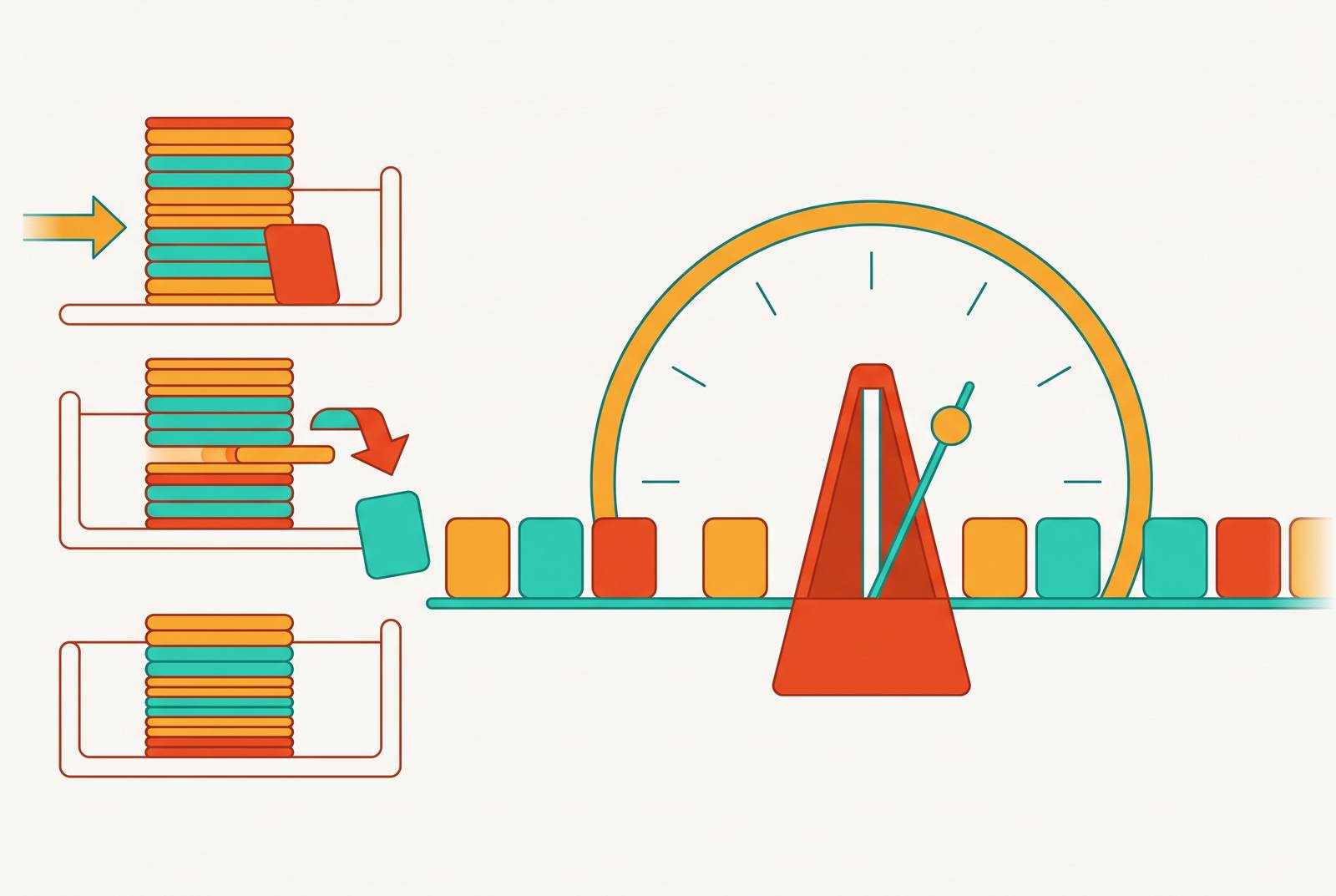
A buyer researching a purchase today often meets a brand for the first time inside an AI answer, not on the brand's own site. AI assistants do not hand back a ranked list of links the way a search engine does. They synthesize a single confident answer, and that answer frequently forms the buyer's first impression before a branded touchpoint ever enters the picture. The stakes of being left out, or being misrepresented, are immediate and tied directly to the pipeline. The unit these systems pull from is a claim tied to an entity, drawn from websites, listings, reviews, and structured data. A brand's entire content archive is only as useful as the discrete, consistent claims that can be lifted out of it.
The shift is visible in how publishers describe their own traffic patterns. Mike Peralta, CRO of Future, has said the publisher shows up consistently in AI-generated responses when its titles hold genuine authority on the topic. That is not a marketing claim about hypothetical upside. For a brand, the equivalent question is whether the brand's claims are built in a form these systems can find, trust, and repeat.
What AI Citation Actually Requires From Content (and Why Most Existing Libraries Fail the Test)
Most content libraries that fail to get cited by AI systems do not fail because of weak domain authority or short word counts. They fail because the content was built for a crawler that ranks URLs, not for a model that extracts discrete, attributable claims about a named entity. A page can rank well in traditional search and still give a language model nothing usable: no clean statement of what the product does, who it serves, what it costs, or how it compares to the next option the buyer is considering.
The failure is visible in a handful of recurring patterns. Pricing, features, and use cases often live buried inside marketing copy with no structured list and no schema markup attached.
That consistency gap gets worse with age, not better. The old page carries more authority signal than the new ones, so it wins the citation, and the model's description of the company freezes in a moment that no longer reflects reality. Publishing more content does not fix this. Publishing consistent, structured claims that replace the outdated ones does.
The clearest diagnostic for where a brand stands is what practitioners call the mention-citation gap. Closing that gap takes structured, authoritative content on the brand's own domain that answers the specific questions AI engines are already surfacing, in a form those engines can extract cleanly. Corroboration and giving the model something concrete to point to both affect whether it can verify and repeat a claim.
The Volume and Refresh Requirements of AI-Cited Content
Reliable AI citation needs a volume and refresh cadence that sits categorically beyond what a traditional editorial calendar can handle. This is not a matter of a content team working harder with the same approach. It requires operating on a different model.
So consider the actual scope of coverage you need to compete for citations across a mid-sized product category. A quarterly blog cadence built around a handful of thought-leadership posts a month was never built to cover that much ground.
Freshness compounds the volume problem instead of sitting beside it as a separate concern. But the inverse is just as true: older content loses citation priority without regular freshness updates, so a gap in refresh cadence produces a direct gap in citation visibility. A page published two years ago and never touched since is actively decaying as a citation source, even if nothing about its underlying claims has changed.
The pace of change on the model side makes static content strategies fragile in a structural sense, not just a tactical one. Training updates, RLHF cycles, and shifts in how retrieval augmentation works can all move a brand's citation profile without warning. A content plan built once a year and left alone cannot respond to that kind of movement. The systems that decide what gets cited are themselves changing on a timeline measured in weeks, and a publishing program has to move on a comparable timeline to stay inside the window.
The GEO content calendar as the primary operational instrument for managing cadence at scale
A GEO content calendar is the instrument that keeps a brand's content inside AI citation pools continuously, rather than treating publishing as a one-time project with a finish line. It functions as a standing publishing and refresh schedule built to maintain citation eligibility across the full year, not a content plan that gets written once and executed in sequence.
The calendar has to run two distinct workflows at the same time, and coordinate between them. Net-new production covers structured pages that target sub-intents and buyer questions the existing inventory does not yet address. Refresh cycles cover scheduled updates to pages that already exist, renewing freshness signals, correcting claims that have gone stale, and adding structural elements, schema, answer blocks, and citation additions, that the page lacked when it first went live. If content goes live without a scheduled refresh date attached, it is already on a path toward citation decay, even on the day it publishes.
Every piece that enters the calendar, whether net-new or refreshed, has to clear a structural quality floor before it counts as having done its job. It means comparative or specification data presented in labeled HTML tables. It means FAQ blocks phrased in the actual language buyers use. Length matters too, though as one input among several: posts that fall within a sensible working range are more likely to rank and drive engagement than pieces that are either too thin to carry a complete answer or padded well past the point the answer required.
Volume without that structural floor produces worse citation outcomes than a smaller volume of properly structured content. Publishing a large number of thin, poorly tagged pages does not just fail to help you. It actively works against the brand, diluting the signal a model needs to trust any single page as authoritative. The calendar's job is to make velocity and quality compound together.
The content inventory audit as the foundation every publishing system requires before cadence decisions make sense
If you set a publishing cadence without a current inventory baseline, you are planning a route without a map. The audit is what establishes what already exists, what is currently eligible for citation, what has decayed, and where the real structural gaps sit, so that production and refresh decisions respond to actual deficits instead of guesses about where the problems probably are.
A full audit breaks into seven steps, and each one produces a scored, usable output. The roadmap ties all of it together into a prioritized production and refresh plan built directly from the scored findings.
The cadence for running this matters as much as the method. A full audit belongs on a quarterly schedule, with schema and chunk spot-checks run after any significant content release in between. An annual audit is stale by the time anyone reads it, since AI engines change their citation behavior fast enough that a once-a-year review cannot keep pace. Quarterly is the floor, not an aspiration.
The audit's output is what gives the calendar something real to act on. The competitive delta identifies the next tranche of net-new content the brand needs to produce. The citation analysis flags which existing pages need an immediate refresh, so they don't just wait their turn. The schema and chunk findings generate a queue of structural fixes that can be batched and handled separately from full content rewrites. Without the audit, the calendar is scheduling work against assumptions. With it, the calendar is scheduling work against evidence.
Monitoring Cadence and Prompt Libraries in the Publishing System
If a publishing and refresh system runs without a structured monitoring cadence, it is operating blind. The prompt library and the monitoring schedule turn actual citation behavior into usable signals that keep the calendar prioritized on current conditions.
Building a prompt library is an operational decision, not an SEO afterthought. For most mid-sized programs, a working library runs somewhere between roughly 100 and 200 prompts, though it can run smaller or larger depending on how many products or markets the brand needs to cover.
Monitoring itself has to run across multiple engines on a fixed cadence, because responses vary by platform, by how a prompt is phrased, and over time within the same platform. A single run on a single engine does not produce a signal worth acting on. Surfacing what engines are actually saying about a brand across the volume of responses generated daily requires monitoring infrastructure purpose-built for that problem.
The mention-citation gap, tracked across time rather than as a single snapshot, is the clearest signal of whether content investment is converting brand recognition into source authority. A gap that narrows over time means the structural work, the consistent claims, the schema, the refreshed pages, is succeeding. But if the gap widens, the content still isn't trusted enough to cite, no matter how often the brand gets mentioned. That signal feeds directly back into the system built in the previous two sections: weekly citation analysis feeds the refresh queue, and new competitive gaps surfaced by the prompt library roll into the next quarterly audit and generate new entries on the calendar.
Why AI perception scoring gives the publishing system a strategic signal that citation tracking alone cannot
A brand can post strong citation numbers and still be losing the argument that matters most. When high visibility pairs with a weak or muddled narrative, the content program is achieving presence without positioning, and citation tracking, by itself, cannot see that gap. Getting mentioned frequently is not the same as getting described correctly, or favorably, or in a way that beats the competitive framing a buyer is holding in their head.
Visibility and perception are two different measurements, and they need to be tracked separately rather than treated as the same number expressed two ways. Visibility measures how often and how reliably a brand shows up in AI answers. Perception measures how the brand gets interpreted once it shows up: its favorability, the framing used to describe it, the strength of the narrative built around it, its position relative to competitors, and whether its intended messaging actually comes through in the model's output. A brand can hold strong scores on both of these measures, or strong visibility paired with weak perception, and the two can diverge with real confidence behind each number independently.
The discipline of measuring perception has real empirical grounding. The AI Perception Index 2026 measured brand perception across large language models using standardized prompts, and it found a 36-point gap in perception scores between dominant brands and emerging ones. A brand can look strong on one system and noticeably weaker on another, so perception has to be checked across models, not assumed to be stable just because one system returns a favorable answer.
A serious perception architecture tracks dimensions that citation counts cannot capture on their own. Narrative trajectory tracks whether a brand's standing in AI output is strengthening, hardening into something stable, fragmenting, or fading over time. Confidence has to be reported alongside every score, since a perception number built on stable agreement across multiple models, repeated runs, several prompt families, and a strong base of earned media carries far more weight than the same number produced from a thin sample.
What perception scoring gives the publishing system is direction. It tells a team which narratives the content program is actually winning and which ones it is losing, and that is what should determine where the calendar concentrates its next quarter of production, not citation volume alone.
What a Mature AI Content Program Looks Like
A mature AI content program is a different kind of operation, one where publishing cadence, inventory management, monitoring, and perception scoring function as interlocking infrastructure rather than four separate initiatives run by different teams on different schedules.
In practice, the integrated system runs on a clear rhythm. Quarterly full audits produce a scored inventory baseline and a prioritized roadmap. That roadmap populates a GEO content calendar that schedules both net-new production and refresh work. The calendar runs on a steady publishing cadence, and every piece has to clear the structural quality floor before it goes live. Weekly citation analysis and ongoing prompt library monitoring feed straight back into the refresh queue, and they surface new competitive gaps as they open. Perception scores, tracked across models with confidence levels attached, tell the team whether the program is building the right narrative or just accumulating mentions, and that finding drives what the calendar prioritizes next.
Most teams are not running this system. None of that is a failure of effort. It is a mismatch between the tools a team is using and what the problem requires of them.
The gap between a mature program and an early-stage one is a systems gap. A smaller organization that builds the actual system described here, the audit, the calendar, the monitoring loop, the perception scoring, can compete against brands many times its size.
The intervention is the same whether a brand is trying to enter AI citation pools for the first time or trying to stop losing share it already holds: authoritative third-party content that reflects the brand's correct positioning, built so it gets absorbed into model training and retrieval pipelines directly, corrects the narrative at its source. Platforms built to score across these signals, visibility, perception, consistency, trajectory, exist precisely because the system described in this piece needs a way to measure itself continuously, not once a year. Measurement has to come before optimization, and the cadence of that measurement has to match the cadence at which the models themselves are changing: weeks, not quarters.