LLM Mention Monitoring Instrumented Into Your Existing MarTech Stack
Track how AI assistants mention your brand versus competitors in conversational answers.
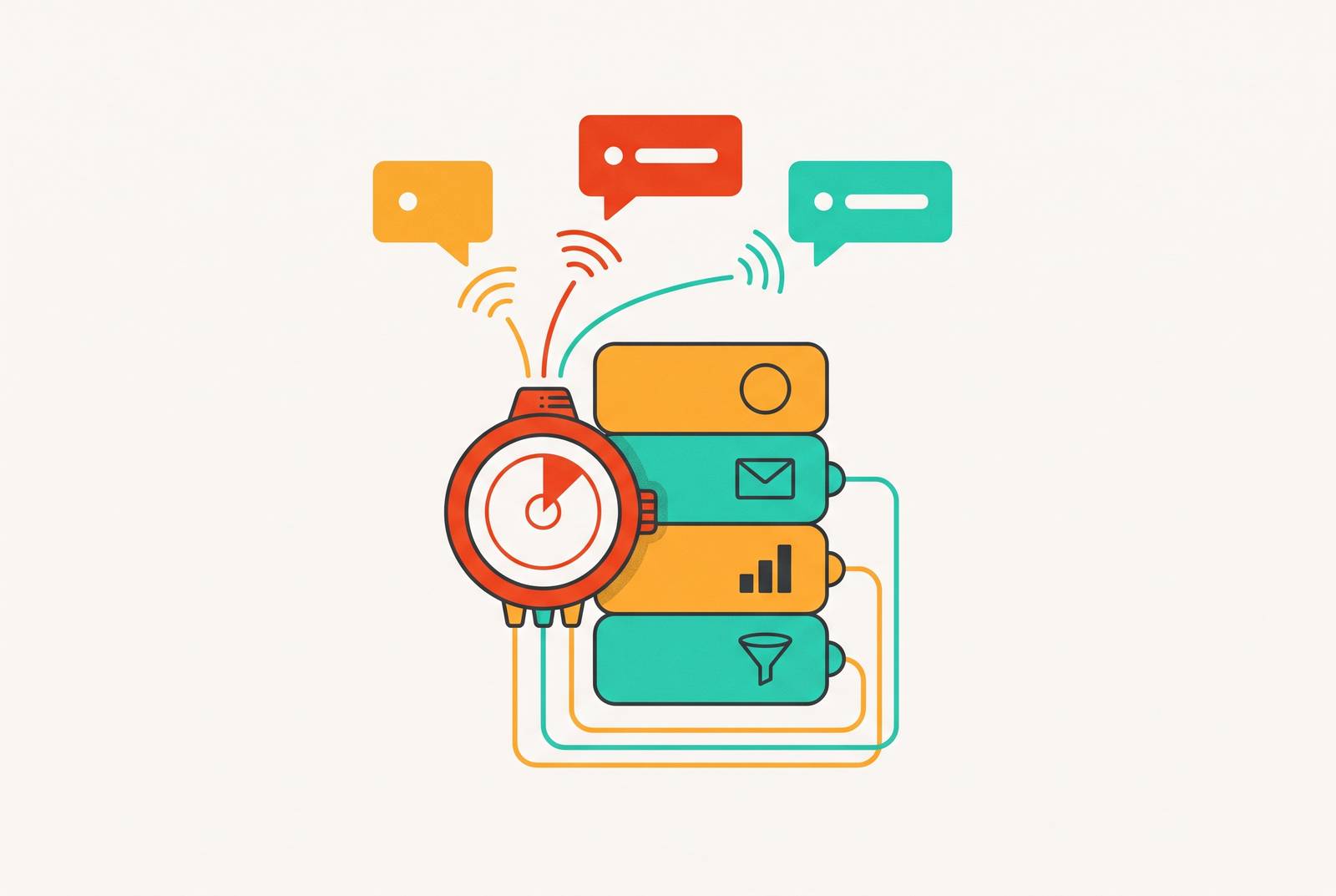
Competitive AI visibility benchmarking shows which competitors AI assistants recommend instead of your brand by testing the same prompts across models and recording mentions, sentiment, and citations. What AI says and the sources it cites still need a repeatable connection to the content and analytics workflows your team already runs.
Why the MarTech stack has a monitoring blind spot for LLM mentions
Marketing stacks measure published content and observable activity, while LLMs produce conversational answers that may never generate either a public post or a website visit. That is the structural mismatch. A model can criticize a brand or leave it out of a recommendation without triggering a social alert, a review flag, or a keyword ranking drop.
Snowflake’s 2026 martech report describes how AI/ML technologies fit into every layer of the modern marketing stack and has a category just for LLM. Deployment has outpaced measurement. Teams have plenty of platforms with native AI features built in, but their tools for each channel were not built to measure how brands appear in conversations. SEO rankings and social sentiment therefore cannot close this gap, because LLM answers are neither indexed pages nor public posts. Optimizing for inclusion without testing those answers leaves the outcome unmeasured.
How LLMs actually evaluate and represent brands — and why the signal differs from every channel marketers already track
LLM brand representation comes from two sources, the associations a model has learned and the information it retrieves. During training, models learn patterns between brand names and the words around them from billions of text examples. Repeated associations with words such as “reliable” or “disappointing” help shape how a brand is represented before a question is asked. The brand does not start with a blank slate. Its own messaging is only part of the language from which those associations form.
Retrieval-augmented generation, or RAG, adds another source of information by bringing content from outside the model into an answer. That content may include the live web. A response can therefore blend historical associations with retrieved information, rather than simply repeat a brand’s current positioning or its latest reviews. Third-party publications, review platforms, and forums are cited far more frequently than a brand’s own content when models synthesize sentiment. The testimonials page is not the whole jury.
This also means familiarity does not buy emotional loyalty. Models represent brands through attributes and associations rather than affection, and unsupported claims or pricing discrepancies can appear in their responses when explicit evidence is missing. Results vary by prompt and model. ChatGPT, Gemini, and Claude can describe the same company differently, while repeated queries can produce different answers within one model. Monitoring must test prompts across models and over time, so that one flattering answer does not become a certificate fit for framing.
What signals an LLM monitoring layer needs to capture
The first requirement is mention frequency measured against competitors using the same prompt set. “Share of Model” describes how frequently and favorably a generative AI mentions a brand in response to relevant prompts, extending the idea behind traditional share of voice. The comparison needs a common yardstick. Recommendation prompts such as “What is the best tool for X?”, comparison prompts such as “How does Brand A compare to Brand B?”, and category prompts such as “What do most teams in role Y use for Z?” expose different parts of brand representation. Comparing brands with prompts that ask unrelated questions would make those differences harder to see.
The second requirement is sentiment classification that includes absence. Outputs need four categories, namely positive for favorable mentions or recommendations, neutral for factual mentions, negative for criticism, and absent when a contextually relevant brand is not mentioned. Without testing prompts, a team cannot tell whether a brand was left out or an alert simply never came. For brands trying to get included, that difference helps show whether they have a visibility gap or a problem with their messaging.
The third requirement is citation source attribution, which records the third-party sources an answer cites when describing a brand. Sentiment alone does not show what to fix. Knowing which publications, review platforms, or forums appear in the answers gives content teams sources they can look into. The fourth requirement is cross-model consistency across ChatGPT, Gemini, Claude, and Perplexity. Large differences can point to conflicting or missing information in sources a model gives weight to, so model variance can help teams find problems that they might dismiss as background noise.
Where the monitoring layer fits inside the stack marketers already own
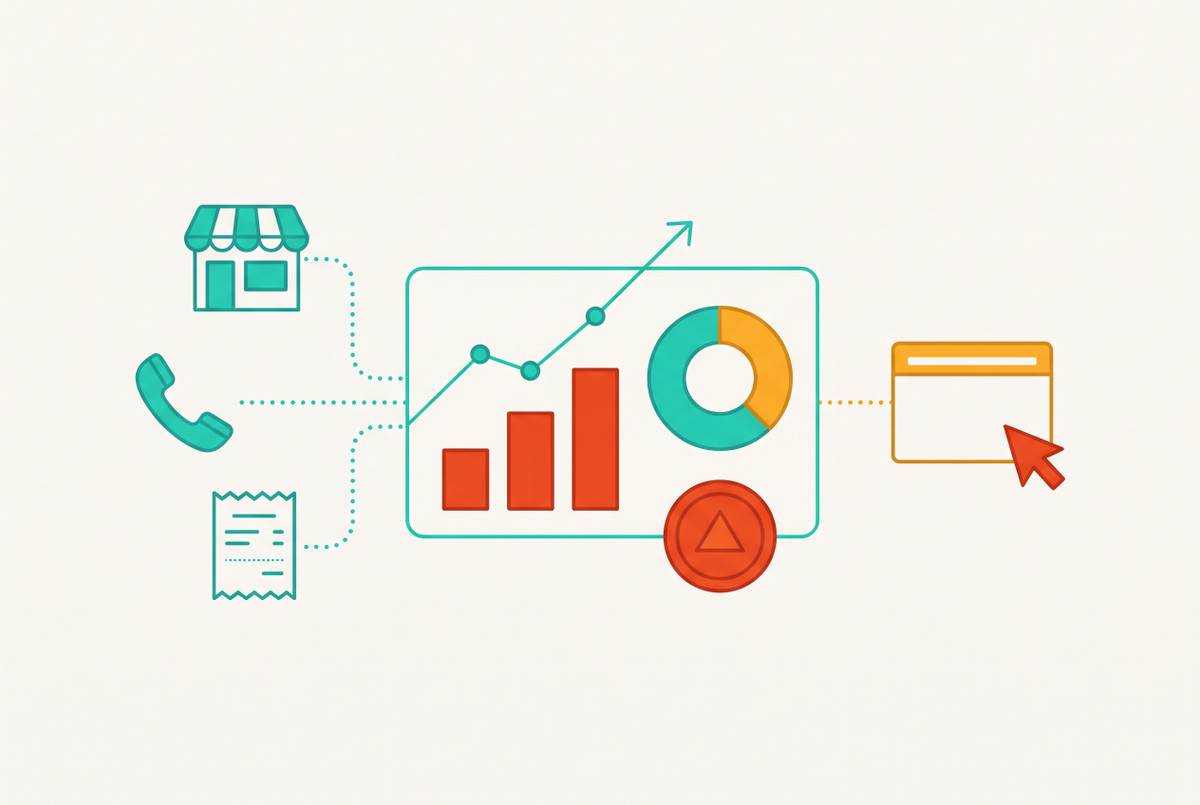
To implement those requirements, use three existing architectural layers, which are traffic measurement, content intelligence, and brand listening. Traffic tools connect AI-originating visits to outcomes, while content and listening tools capture mentions, competitors, sentiment, and citations. Evident has a scoring framework that covers AI, algorithmic, and human evaluation so teams can compare their assessments over time. Its role is to tie the scoring together while recognizing that a website session and a brand mention are distinct events.
At the traffic layer, GA4 is the entry point. Google added a native “AI Assistant” channel to GA4’s Default Channel Group in May 2026, with broad availability from around June 7, 2026. It automatically classifies traffic from ChatGPT, Gemini, Deepseek, Copilot, Grok, and other AI assistants without custom setup. Classification is forward-only, so historical traffic is not reclassified. Teams should establish this baseline now and use it to connect AI-sourced visits with on-site behavior and conversions.
That connection has a firm boundary, however. GA4 captures sessions that follow a click. It handles the attribution side of the system, while prompt-based monitoring is still needed. A recommendation that shapes perception but produces no visit remains outside that view. Finance gets a conversion trail.
At the content intelligence layer, Semrush’s AI Visibility Toolkit extends an existing SEO workflow with brand mention and share-of-voice tracking across ChatGPT, Google AI Overviews, Gemini, and Perplexity. Its tools include Visibility Overview, Competitor Research, Prompt Research, Brand Performance, Prompt Tracking, and AI Search Site Audit. Semrush used its own toolkit to more than double its AI share of voice in approximately one to two months.
At the brand-listening layer, Profound provides mention frequency, share of voice, competitor benchmarking, citation attribution, and sentiment scoring through a prompt database covering ChatGPT, Gemini, Claude, and Perplexity. Its GA4 integration limits revenue attribution to AI-originating traffic and conversions. HubSpot’s AEO offers another existing-stack route. It tracks brand appearances across ChatGPT, Gemini, and Perplexity and generates prioritized content recommendations within the HubSpot marketing environment. The choice depends on the workflow a team already has, and cross-model scoring gives teams a shared basis for review.
How do you find out which competitors AI assistants recommend without buying anything new?
For a first audit, build a prompt set in a single work session using AI tools already available to the team. Include recommendation, comparison, and category questions that fit the brand’s place in its market. Use prospects’ language. Include questions that allow competitors to appear without explicitly naming your brand, as well as direct comparisons. Otherwise, the audit risks mistaking a model’s repetition of a name placed in front of it for a recommendation of that name.
Run the same prompts across at least three models, using ChatGPT, Gemini, and either Claude or Perplexity. Record each response verbatim. The exact words are the evidence used for sentiment classification. For each output, record whether the brand appears, which competitors appear instead or with it, and whether the brand’s representation is positive, neutral, negative, or absent. Note the third-party sources cited when the brand is mentioned so that the audit preserves both the answer and its visible sources.
Next, compare the outputs across models and prompt categories. A recommendation in one model and an absence in another identifies a gap to investigate in that model’s source coverage, with the role of any particular page still unproven. Date the baseline and commit to rerunning the same prompts on a fixed cadence. One answer is still only one answer. The immediate deliverable is a prioritized record of absent or negative representation, the rivals appearing in those contexts, and the citation sources that can guide remediation.
What to fix in the content and authority architecture once monitoring shows a gap
Start remediation with entity hygiene, because unclear factual identity makes the later work harder to interpret. Founding date, headquarters, product descriptions, and key achievements need consistent representation in formats LLMs can parse without guesswork. Schema markup and consistent JSON-LD structured data reduce that ambiguity. Where promotional claims lack structured entity consistency, they can be treated as unverified marketing copy with insufficient evidence for inclusion.
Once the entity is clear, build up proof-point density. Content without verifiable support can lose its marketing language during LLM synthesis, leaving little that distinguishes the brand. Add hard statistics, direct expert quotations, and inline primary source citations where they support the claim. Give the model something concrete to retain. This is not a request to make every page read like a laboratory report, but to replace unsupported praise with information that can survive summarization.
Then use citation attribution to prioritize earned coverage. The publications, review platforms, and forums already showing up in monitored answers show where work to build authority is most likely to help. A brand’s own testimonials page has less weight in AI synthesis than external commentary. Content and analytics teams should share responsibility for this loop so that the people interpreting the signal stay connected to the people changing the material behind it.
Turning LLM monitoring from a one-time audit into an ongoing workflow
To make the work repeatable, assign owners and put the results into the existing SEO performance and brand health review cadence. A prompt-based audit once per quarter is the minimum, while teams actively building citations benefit from monthly tracking. Models change, and outputs remain probabilistic. Recurring sampling helps teams detect representation shifts after content changes without treating a single response as a trend. Quarterly stack health reviews already provide a natural home for that discussion.
Analytics interprets what changed, while content teams decide what to create, correct, or strengthen. A separate AI report would leave that connection to chance. At each review, the team should assess whether mentions are becoming more or less frequent, whether models cite the sources targeted by the citation program, and whether cross-model consistency is improving. Traffic and conversion reporting can then show which AI-originating visits led to measurable on-site outcomes.
As the work grows, Evident’s scoring framework offers a way to aggregate AI, algorithmic, and human evaluation signals into a single number tracked over time. It serves a role comparable to domain authority, but for AI perception. The score gives recurring reviews a manageable reference point while the underlying mention, sentiment, and citation records guide action. That turns manual prompt logging into a managed, comparable metric within the existing operating model.
An audit shows who got named this time. An instrumented discipline shows how that pattern changes, which sources shape it, and where the team should act next.