Re-Engagement Automation for Dormant B2B Contacts
Dormant contacts convert at 2–3× the rate of net-new leads, at one-fifth the cost.
Re-Engagement Automation for Dormant B2B Contacts.
Why dormant contacts are undervalued pipeline, not dead weight
Most B2B marketing teams treat dormant contacts as a write-off. The data doesn't support that instinct. That's not a marginal efficiency gain but a structural one.
60 to 80% of the average B2B database goes dormant without any structured reactivation program in place HubSpot 2026 marketing benchmarks omnibound.ai Email Automation for Re-Engagement Campaigns Explained Customer Re-Engagement Workflow for 2026 | McCary Group. That gap, between the contact volume a company already owns and the pipeline it actually extracts from that asset, is enormous, and it's enormous specifically because so few teams build a system to close it HubSpot 2026 marketing benchmarks omnibound.ai Email Automation for Re-Engagement Campaigns Explained Customer Re-Engagement Workflow for 2026 | McCary Group. Every one of those contacts was acquired once. Someone paid for the ad click, the content download, the trade show badge scan, or the outbound sequence that got them into the database.
That acquisition cost is sunk. Re-engagement doesn't need to recreate it, it only needs to spend a fraction on data refresh and sequencing rather than absorb a full cost-per-lead on a total stranger. Which is why "dormant" deserves a more precise definition than most teams give it. A dormant contact isn't a verdict on buyer intent, it's a workflow state, and workflow states change. The job the rest of this piece does is explain how. HubSpot's marketing benchmarks show that re-engaged leads convert at 2–3× the rate of net-new leads, at roughly one-fifth the acquisition cost tofuhq.com.
Why the reason contacts go quiet determines the fix
Programs built to reactivate dormant contacts tend to fail for a simple reason: they treat everyone in the "inactive" segment identically, when the cause of the silence is the single most important variable in choosing the fix. Three causes dominate.
The first is a job change. The person is still a buyer, arguably a better one now that they've moved into a new role, but the email address died the moment they left. The intent didn't disappear with the domain. The second is bad timing: no budget last quarter, a reorg that froze every initiative, a project shelved for reasons that had nothing to do with the product. Interest was real. The calendar was wrong. The third is channel fatigue, the quieter killer. The same inbox got hit with the same template often enough that the contact tuned out. The lead is fine. The channel is exhausted.
A fourth cause explains all three: data decay produces this pattern. Some contacts on a "dormant" list were never actually reached, because the address on file was a guess, a typo, or a catch-all that swallowed the message before a human ever saw it. And a fifth category deserves honesty rather than optimism: some contacts are simply wrong-fit leads that will never convert, no matter how clever the sequence. Re-engagement, done properly, also means suppressing those contacts cleanly so the active list stays sharp rather than bloated with names that will never respond.
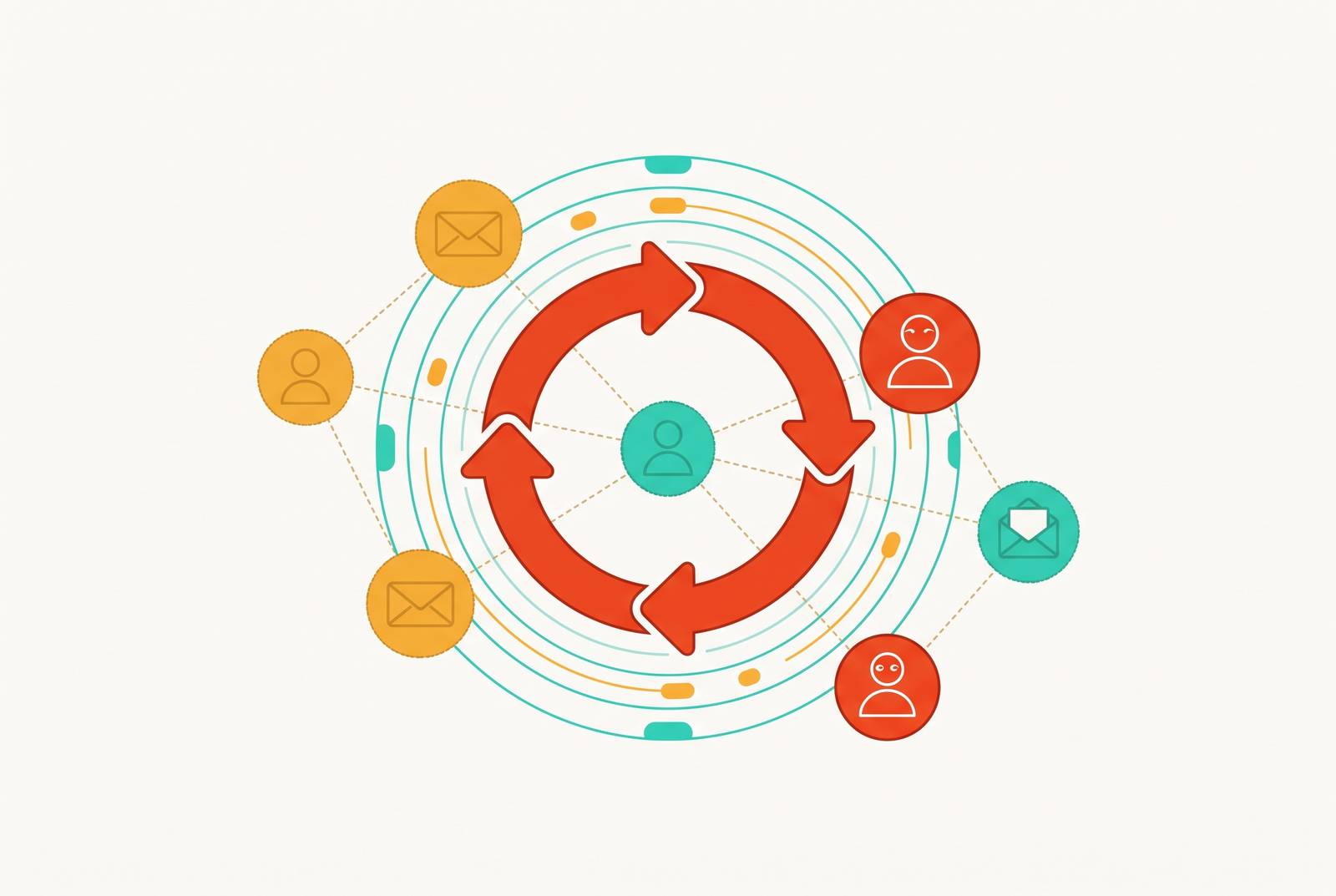
The design implication follows directly. Segment by cause, not by how long ago the contact last opened an email. A job-changer needs a different play than a no-budget ghost, and both need something entirely different from a closed-lost deal or a channel-fatigued lead who just needs a new format. The data underneath that segmentation has to hold up before it can be trusted, and that's where most programs run into trouble first.
Data hygiene as the prerequisite step most teams skip
Launch a re-engagement sequence on a raw dormant list, and the likeliest outcome isn't a wave of replies, it's a bounce spike that burns sender reputation before a single prospect even sees the message. This is the failure mode nobody plans for and almost everyone hits.
Sending into that list without cleaning it first isn't aggressive, it's wasteful, and it actively damages deliverability for every other campaign running through the same sending domain. The cost of poor hygiene doesn't stay contained to the dormant segment, it leaks into everything else.
The fix is a three-step refresh, done in sequence, before a single message fires. Run the list through an email verifier and drop the hard bounces. Re-find current addresses for the job-changers using an email finder or enrichment tool, since the old address is worse than useless, it's actively corrosive to deliverability. Then layer in enrichment to update title, company, and phone so the segmentation from the previous section actually reflects reality rather than a six-month-old snapshot.
Suppression discipline belongs here too, as a core part of the system. Contacts who don't re-engage after a full sequence should move to a dormant suppression list, not linger in the active database indefinitely. Continuing to send to confirmed non-engagers doesn't just waste effort, it inflates list size without contributing anything to pipeline and quietly erodes the sender reputation every other campaign depends on. With a clean, correctly segmented list in hand, the next question becomes one of timing: when does a contact actually qualify as dormant, and when is the right moment to reach back out? For a 1,000-contact inactive list, verification typically identifies 300–500 contacts as still role-current, meaning 50–70% of a raw dormant list may already be unreachable thedatabaseproviders.com globenewswire.com Customer Re-Engagement Workflow for 2026 | McCary Group.
Defining dormancy thresholds and the optimal reactivation window
"Dormant" needs a real threshold attached to it, a clear number rather than a vague sense that someone hasn't responded in a while. No inbound reply and no site visit in 90-plus days is a workable default for most B2B products, but that default should flex with the sales cycle it's serving Customer Re-Engagement Workflow for 2026 | McCary Group.
Shorter sales cycles justify a tighter marker, around 60 days Customer Re-Engagement Workflow for 2026 | McCary Group. Longer cycles, the kind common in professional services, B2B consulting, commercial contracting, or any large-ticket purchase, need more room: 120 to 180 days is a more realistic dormancy threshold before a contact should be treated as gone quiet rather than simply mid-decision tofuhq.com Customer Re-Engagement Workflow for 2026 | McCary Group.
Timing the outreach itself is its own discipline. The optimal win-back window for most B2B products is between 60 and 90 days after the churn event. Move earlier than that, and the outreach can read as reactive rather than considered, a company chasing a contact rather than returning to them with something to say. Wait too long past that window, and the previous commercial context stops carrying any weight at all, the conversation has to start from zero.
Performance benchmarks back up the value of getting this right. For contacts who were previously engaged, having opened at least three emails before going quiet, a well-designed automated re-engagement sequence achieves re-engagement rates of 20 to 40% tofuhq.com. That's not a small number for a segment most teams have already written off. These thresholds aren't just definitions, they're the parameters the automation layer needs to act on, and that's where the architecture comes in.
The automation architecture: segmentation, sequencing, and suppression logic
Automation's job here isn't to make outreach more frequent, it's to make it more responsive.
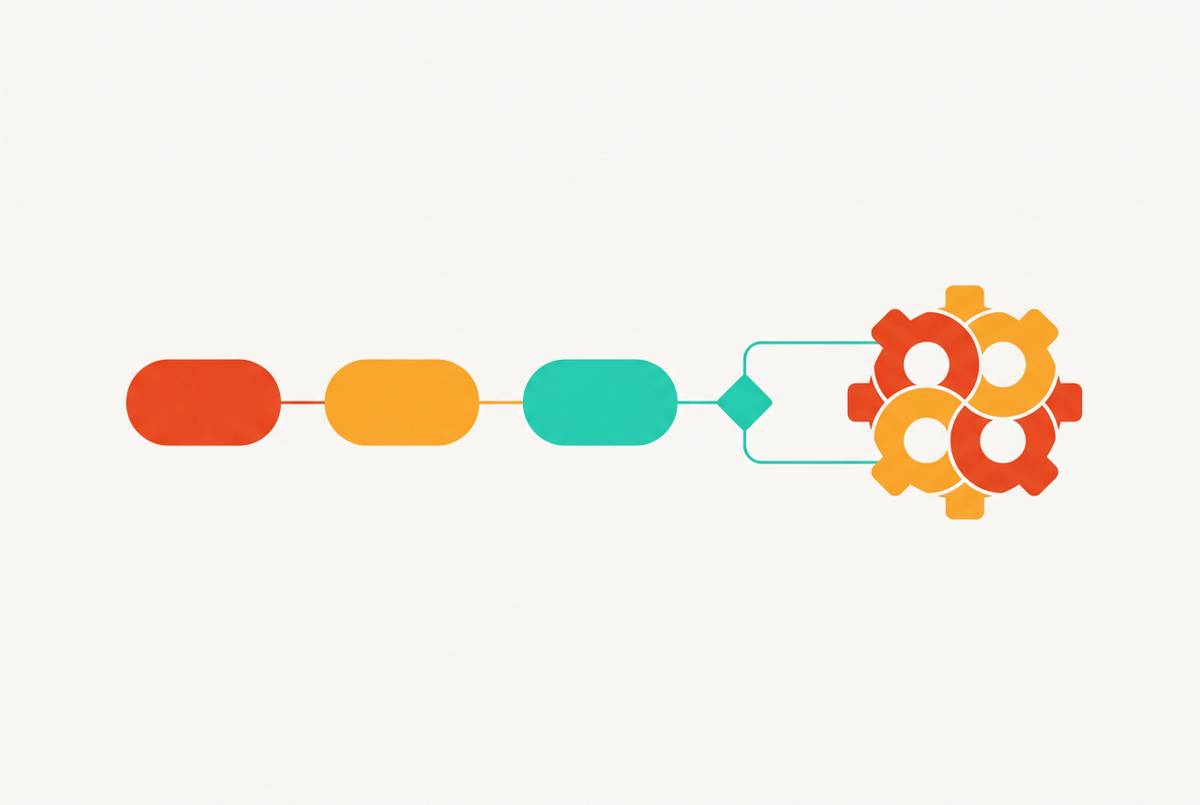
That system runs in five phases. Pull and segment the dormant list from the CRM by cause, job-changer, no-budget ghost, closed-lost, channel-fatigued, since that segmentation from earlier determines everything downstream. Refresh the data before any sequence fires, following the hygiene process already described. Match channel to segment: an email-fatigued lead responds better to LinkedIn or a phone call than a fourth email, and a job-changer needs a genuinely fresh first touch rather than a "following up" thread that references a company they no longer work for.
The message itself needs a reason to exist beyond nostalgia. "Here's what changed since we last talked," a new feature, a pricing shift, a case study from their exact industry, consistently outperforms anything that reads as a guilt trip dressed up as a check-in. And scoring should run on pipeline signals, replies and meetings booked, not opens, which measure attention but not intent.
Sequence length matters too. A full three-email sequence is the standard, and contacts who don't re-engage after it should move to the dormant suppression list rather than linger indefinitely. Platform success depends more on how well a tool matches the way marketing, sales, and customer success actually operate day to day than on how many features it packs in. Multi-channel orchestration is simply the norm for programs that work, email, LinkedIn, phone, direct mail, and content experiences each carrying a different segment, and most teams end up needing two or three tools working in concert rather than one platform doing everything. The sequencing architecture handles the outbound motion. Deciding exactly when to fire it is a separate problem, and that's where intent data starts to matter. Smarketers' implementation data across 18 MAP audits shows that re-engagement programs contributed 8–19% of marketing-sourced pipeline (a meaningful share that most organizations leave unstructured) tofuhq.com.
Using intent signals to trigger re-engagement at the right moment
Firmographic data tells you what a company is. Intent data tells you what it's doing right now, and that distinction is the entire reason intent signals have become central to re-engagement timing. Behavioral signals, content consumption patterns, search activity, spikes in research around a particular topic, reveal when an account has started actively evaluating solutions again, something a static company profile could never surface.
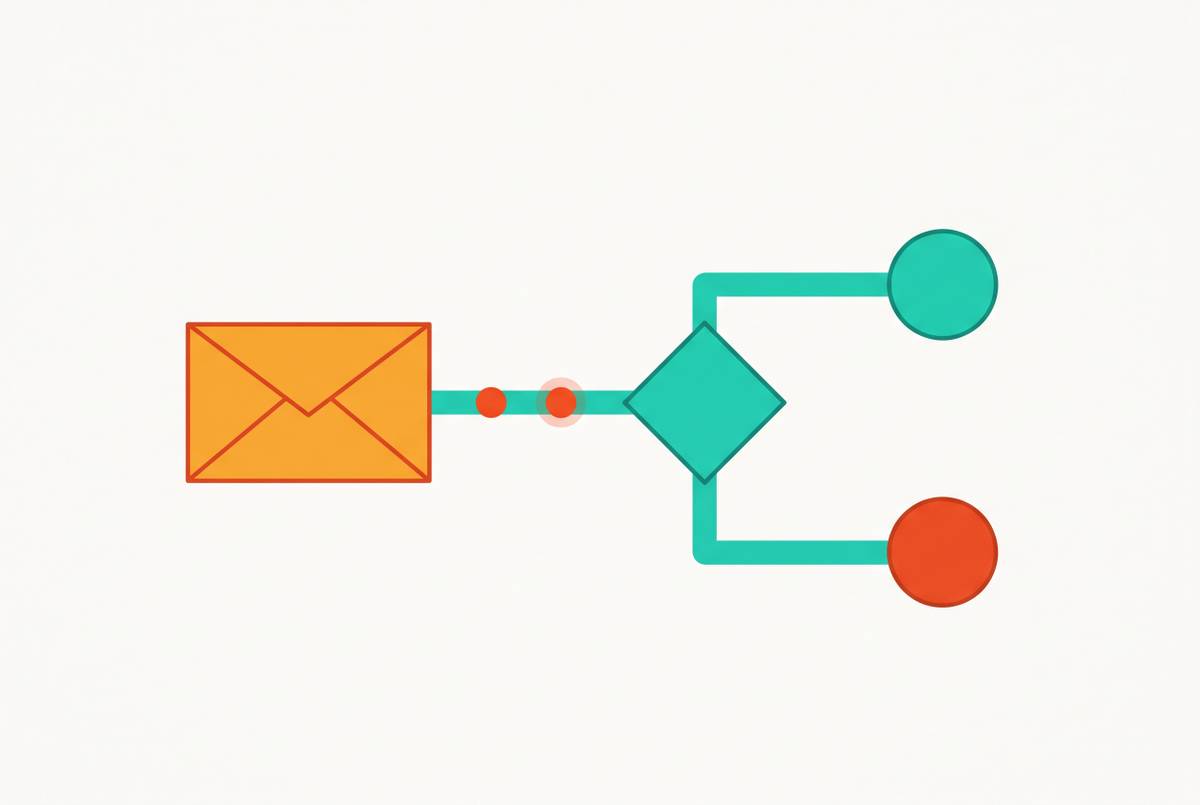
The trigger logic follows naturally. When a dormant contact from six months ago suddenly spends time on a pricing page or a set of case studies, that behavior is the signal to reach out with something specific and timely. Recency matters enormously here. Activity within the last 48 to 72 hours deserves priority, since engagement signals from months back may no longer reflect anything close to active consideration.
AI improves this pipeline across three distinct layers. It aggregates signals at a volume no human analyst could process manually, surfacing patterns buried in behavioral data. It scores accounts predictively, ranking purchase likelihood by signal recency, topic clustering, and firmographic fit. And it automates the workflow itself, triggering outreach sequences, ad audiences, or CRM tasks the instant an account crosses a defined scoring threshold. CRM integration closes the loop, alerting account owners the moment their targets show renewed interest, which focuses effort on accounts at peak buying interest rather than working down a static, undifferentiated call list.
One caution belongs here. Generic signal-referencing has become its own kind of noise. "Congrats on the funding round" doesn't land anymore, because every rep with access to a standard sales tool sees the same event fire. What actually works is connecting the signal to a specific, relevant outcome, tying the funding round or the pricing-page visit to exactly what it implies the prospect needs solved right now. Intent signals solve the timing problem for contacts already sitting in the CRM. A newer and less comfortable problem is that plenty of buyers are researching vendors through AI systems long before they ever generate a signal a sales team can see.
The tool landscape for re-engagement automation in 2026
The tool landscape for this problem splits by which layer of the re-engagement challenge each platform actually addresses, and no single vendor covers all of them.
Workflow automation and lead scoring sit with HubSpot, Marketo (Adobe), and ActiveCampaign. Sales-driven outbound re-engagement runs through Outreach and Salesloft, the latter having absorbed Drift in an acquisition completed in February 2024. Intent-based account identification is 6sense's territory. Physical gifting and direct mail belong to Sendoso and Reachdesk, content experience platforms to PathFactory and Uberflip, and AI-generated personalized campaign content at scale is where Tofu operates. Most teams end up running two or three of these together, since no single platform reaches across every layer of the problem.
A separate category of database reactivation service combines data enrichment, AI-powered outreach, and multi-channel engagement into one product. RePitch AI uses conversation intelligence to analyze prior interactions with dormant contacts, crafts contextually relevant reactivation messages, scores leads by engagement history and likelihood to convert, and connects CRM and communication platforms around a typical dormancy threshold of 90-plus days Customer Re-Engagement Workflow for 2026 | McCary Group. AI Knight takes a behavioral-analysis approach, segmenting dormant contacts by engagement history and interaction patterns, then running multi-touch reactivation sequences that adapt based on how each contact actually responds.
Selection criteria matter as much as the feature list. Data from 2024 and 2025 platform audits found that fit with how marketing, sales, and customer success actually operate predicted program success more reliably than feature depth did, which argues for evaluating tools against an operating model rather than a checklist tofuhq.com. Pricing varies widely by tier: HubSpot Marketing Hub, for instance, ranges from $20 a month up to $3,600-plus depending on tier and contact volume tofuhq.com. The ROI case for investing in the tooling isn't subtle tofuhq.com thedatabaseproviders.com.
One layer belongs in this stack that isn't about sequencing or scoring. Evident (evident.so) operates as a perception intelligence layer, scoring how a business is perceived by AI systems, algorithms, and human audiences across more than 400 signals. Where the tools above manage the mechanics of outreach, Evident answers a different question: whether the brand a dormant contact encounters when they come back will reinforce the reactivation message or quietly undercut it. Knowing which tools to run is necessary, but it isn't sufficient, because the buyers these tools are trying to reach are increasingly forming opinions about vendors through AI systems well before they ever respond to a sequence.
AI evaluation of B2B vendors during the buyer research phase
Buyers now consult AI systems to compare vendors, clarify capabilities, and summarize technical specs before they ever land on a website or open an email. That shift changes what "reaching a dormant contact at the right moment" actually means, because the moment increasingly happens somewhere the sales team can't see.
The scale of it is stark. The 2X AI Visibility Index finds that most companies are effectively invisible during the earliest stages of AI-driven buyer discovery tofuhq.com. That means the buyers a re-engagement campaign is trying to win back may already be researching through a channel where the company simply doesn't show up. Gartner's research adds a second layer: 69% of B2B buyers say they prefer to validate AI-generated insights with a sales rep before making a final call. The AI's initial framing of a brand shapes consideration before any human conversation takes place, including the re-engagement email itself. Separately, Gartner's B2B buying research found that 75% of buyers prefer a rep-free experience for most of the purchase journey, which puts real weight on the content doing the persuading, not a follow-up call from an SDR DemandWorks 2026 research.
The mechanics of how models form these impressions matter for anyone trying to influence them. AI systems evaluate B2B brand signals through semantic clarity, content consistency, and third-party validation, prioritizing verifiable credibility over emotional resonance or polished visual design.
The trust dynamics cut both ways. Roughly 80% of buyers trust AI tools at least some of the time, but 20% say AI made them less confident because of unreliable information tofuhq.com omnibound.ai. If AI systems now function as a gatekeeping layer sitting in front of the re-engagement journey, the real question becomes whether a company's brand signals are strong enough to be represented accurately, and favorably, when a model gets asked about it. The Peec AI brand perception launch shows that AI brand perception reveals which attributes models associate with a company, how those associations compare with competitors, which objections recur in AI answers, and where claims in AI answers conflict with facts the company supplies tofuhq.com.
LLM brand perception drift's effect on re-engagement outcomes
LLM perception drift, the gradual shift in how a model characterizes a company across repeated queries over time, is becoming a visibility metric in its own right, sitting alongside older measures like share of voice and keyword rank. For re-engagement specifically, the stakes are direct rather than abstract. A dormant contact who receives a well-timed, well-segmented outreach email is highly likely to do exactly what modern B2B buyers already do before any purchase decision: check the company against an AI system first.
If that check turns up a model that's forgotten a recent product change, misattributes a competitor's differentiator to the wrong vendor, or surfaces an objection the company has already resolved, the reactivation message is fighting an uphill battle it doesn't know it's in. Everything covered earlier, the segmentation logic, the dormancy thresholds, the intent triggers, the tool stack, assumes that once a message lands, the brand behind it holds up to scrutiny. Perception drift is the variable that determines whether it does. Getting the sequencing right solves for timing. Getting the perception right solves for trust, and increasingly, one doesn't work without the other.