Behavioral Segmentation Models for B2B Email Personalization
Behavioral signals, not job titles, predict where buyers stand in their evaluation.
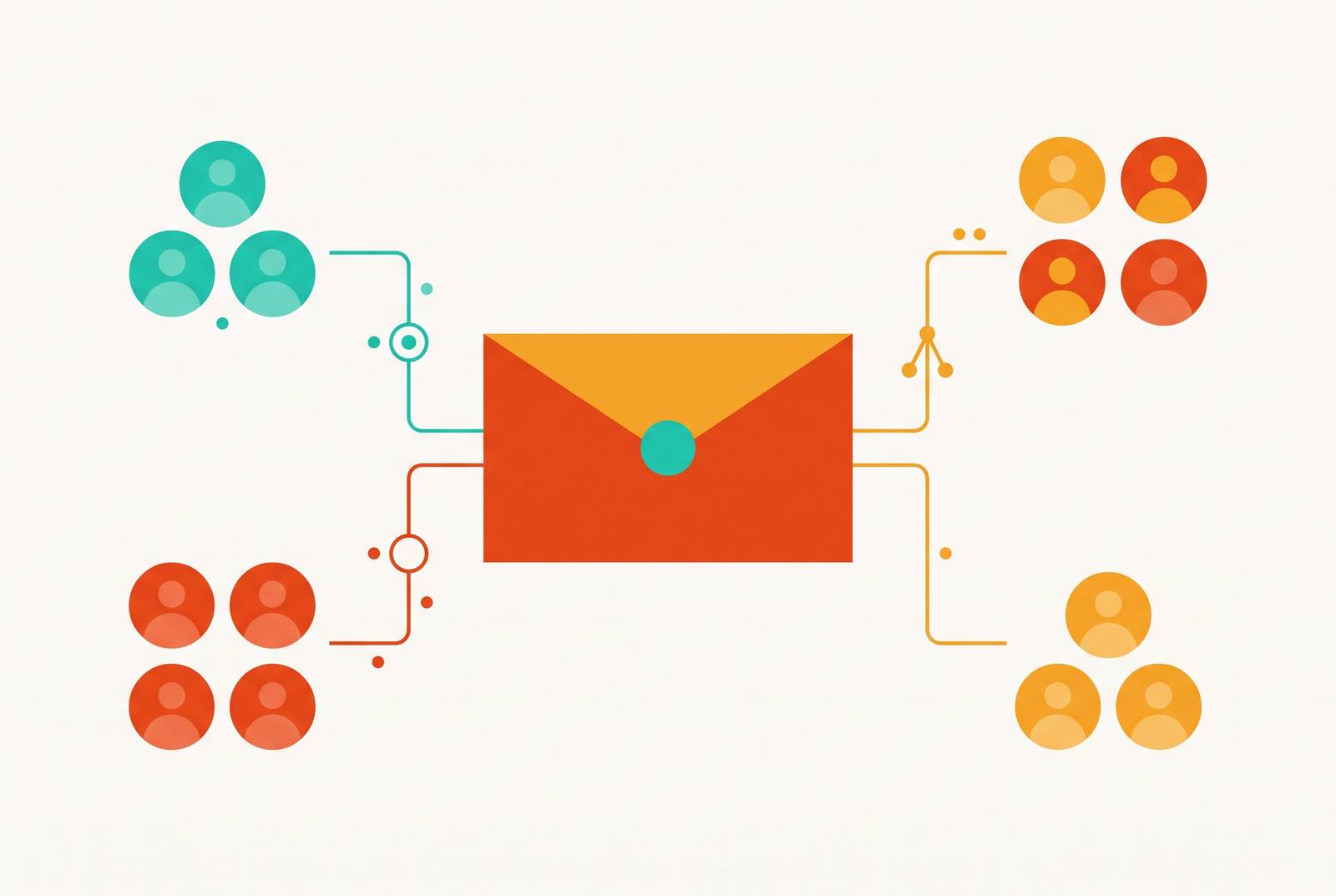
A static segment built on job title, industry, or company size tells a marketer who a prospect is, not what that prospect intends to do next, and that gap is why so many B2B email programs plateau despite clean lists and decent design. B2B purchases involve several stakeholders, and they weigh a solution over weeks or months, so one job-title bucket can't hold a CFO watching the budget, an IT lead checking integration, and a daily user who just wants a tool that works. Multiple studies on B2B buying behavior put prospects well past the midpoint of their evaluation before they ever contact sales: CEB and Google found buyers were 57% through the process at first contact, and 6sense research put the figure near 70% in 2023 and 61% in 2025. By the time a static segment catches up to a contact's job title or company size, that contact has likely already formed an opinion. Subscribers no longer sit still for generic sends on a fixed calendar; they respond to messages that show up at the right moment, reflect what they've actually done, and match where they sit in the buying process. None of this is a technology gap. Many enterprise email platforms already support behavioral segmentation, but how deep and mature that support is still varies a great deal from vendor to vendor. The limit sits in the logic behind the segments themselves: a fixed attribute stands in for an unfolding decision. What a company is stays the same for months at a time. What a buyer does changes by the day, and that difference is where real signal lives.
The segmentation stack B2B programs need
B2B segmentation works best as a stack of layers that build on each other, not a set of interchangeable options a team picks from. At the base sit firmographic and technographic attributes: industry, headcount, revenue, geography, and the tools a company already runs. These fields tell a marketer who to target and where a competitive displacement or integration story might land, but they say nothing about timing. Above that sits the behavioral layer, where pages visited, content downloaded, emails clicked, trials started, features used, and support tickets filed register intent in the record. Intent segmentation sharpens this further by weighing combinations of behavior. A contact who has visited a pricing page several times, pulled down a competitor comparison guide, and sat through a product webinar is telling a marketer something specific, and that contact should get a different email than one who last showed up months ago. At the top sits the predictive layer, where historical behavioral patterns get used to anticipate what a contact is likely to do next, flagging churn risk before a subscriber goes quiet or surfacing the next best offer before a buyer comes back on their own. Predictive tools work best when the data they draw on sits close to the send, inside the email platform itself or connected directly to the CRM, so a team can act on a signal without first running a manual report. The next three sections take this stack apart layer by layer, and you start with the foundation.
Firmographic and technographic segmentation as the targeting foundation
Firmographic and technographic data set the starting conditions for B2B email relevance. Industry, headcount, revenue, and geography identify which accounts belong in a program in the first place, and mapping the buying committee onto those accounts, economic buyer, champion, influencer, user, gives a program the structure it needs to speak to each stakeholder's actual concerns rather than one generic pitch sent to everyone at once. Tracking engagement across several contacts at the same company, rather than fixating on a single lead, raises the odds a deal keeps moving, since B2B decisions rarely rest on one person's inbox. Technographic data adds a second dimension: knowing what tools a company already runs shapes whether the right message is about integration or about replacing a competitor. A company already running a complementary platform is a different kind of prospect than one building its stack from nothing, and the messaging should reflect that difference from the first email.
None of this stays accurate on its own. Contact records, company details, and intent signals decay fast, so a quarterly enrichment cycle is close to the minimum a team needs to keep targeting fields usable. Sendoso's experience with ZoomInfo enrichment makes the stakes concrete. The team cut inaccurate data by a wide margin, saved more than a thousand hours of manual work, reached far more of its ideal customer profile, built substantial new pipeline within two quarters, and traced the gain back to data quality. A common objection holds some weight here: plenty of B2B teams already segment by industry and company size and get decent results, so why push further? Firmographic segments only tell a team who to reach. They carry no sense of when to reach them or what to say, because a static attribute has no way to register where a buyer sits in an evaluation that is happening right now, and the next layer supplies that time dimension.
Behavioral segmentation: grouping contacts by what they do
Behavioral segmentation swaps the question "who is this person?" for "what has this person done, and what does that tell us about where they stand in their evaluation?" That is why email timing and content can land with real accuracy. Pages visited, content downloaded, emails clicked, product trials started, features used inside the product, support tickets filed, webinars attended, and demo requests submitted are the signals worth tracking in a B2B context. Each one is a data point a static firmographic field could never produce, because each one records something a person chose to do at a specific moment.
Teams that take this seriously are moving away from calendar-based sends toward messages triggered by specific actions: a visit to a product page, a renewal date slipping past without action, an onboarding step just completed. The trigger makes the message feel relevant in a way a scheduled newsletter rarely does, because the trigger is proof the contact is paying attention right then. This logic extends into onboarding and nurture sequences through what's sometimes called hyper-segmentation: instead of running every new subscriber through the same welcome series, a program sends a different flow to someone who entered through a free trial than to someone who downloaded a pricing guide, because the entry behavior itself signals a different kind of intent and a different set of questions that need answering. Subscribers who get messages matched to their actual history with a product unsubscribe less often and convert at higher rates than those stuck in a one-size-fits-all sequence.
Intent segmentation takes this same behavioral logic and applies it to the hottest signals in the dataset. A contact who has hit the pricing page repeatedly, pulled a competitor comparison guide, and attended a webinar is actively evaluating a purchase, and that contact should get urgency-weighted content that would be wasted, or worse, off-putting, if sent to someone who simply opened an email after months of silence. Interactive elements inside the email itself, polls, embedded surveys, image carousels, add another layer of behavioral data by turning the message into a small data-collection event. Every interaction inside that email becomes a signal, and it either qualifies the lead further or shapes what gets sent next in a long B2B sequence. Technologies like AMP for Email let a recipient act directly inside the message, so the distance between intent and conversion shrinks, and the data this generates is richer than a simple click-through could ever give you.
AI-enhanced RFM and predictive scoring as the forward-looking layer
Predictive and AI-enhanced models take behavioral segmentation one step further: instead of reacting to what a contact did last week, a program can anticipate what that contact is likely to do next. That shift from reactive to anticipatory is what separates a mature email program from one still catching up to its own data.
The starting point for most of this work is RFM, recency, frequency, monetary value, a transactional model that has worked without any machine learning behind it for decades. Its weakness is that it applies the same fixed thresholds to every contact regardless of their individual pattern. AI-enhanced RFM fixes that by adjusting thresholds to each customer's own rhythm: a contact who typically engages once a month needs a different "at-risk" recency threshold than one who engages once a quarter, and treating both the same way produces false churn alarms on one side and missed re-engagement windows on the other. Beyond the traditional three dimensions, an AI layer can add product category affinity, channel preference, seasonal engagement patterns, and response to specific types of content, building a picture of each contact that is far more granular than recency and frequency alone could produce. These tools now look at behavioral signals, engagement history, and content preference to shape each message around what a subscriber actually did, and work that used to take a data team days to piece together by hand now runs in hours.
For B2B programs, you get the most out of this layer through behavioral lead scoring, account-level engagement tracking across every contact at a company rather than just one named lead, and content personalization tied to job function and industry vertical. A predictive model that flags a contact whose engagement frequency is decelerating relative to their own personal baseline is picking up a stronger churn signal than a model that simply compares that contact's opens to the list average, because it is measuring a change in that person's own behavior rather than a deviation from an average that may never have applied to them. But none of this works if the data underneath it isn't clean to begin with. A predictive model trained on messy, stale, or sparse behavioral history amplifies whatever noise lives in that history. Data quality is the precondition the rest of this stack depends on.
Why first-party data quality determines whether behavioral models work
The sophistication of behavioral and predictive models means nothing if the data feeding them is unreliable, and the industry has shifted in ways that make first-party, permission-based data the only foundation that holds up. Third-party cookies are already unreliable for most practical purposes: Safari and Firefox block them by default, and Chrome has not formally deprecated them but has steadily eroded their usefulness through consent requirements and ad-blocker adoption. Tracking pixels inside email took a separate hit from a major mail client's privacy protections, and open rate itself is now inflated by privacy-driven pre-fetching. It can no longer serve as a primary measure of engagement. Zero-party and first-party data are doing the work third-party data used to do: preference centers, progressive profiling, and behavioral signals captured directly through owned channels are the real foundation now.
Building that foundation means growing lists through permission, not acquisition. Gated content, webinar registration, and demo requests work when the content behind the gate delivers genuine value in exchange for contact information, and form design should capture the fields that actually matter for qualification, company size, industry, role, rather than every field a marketer can think to ask for. Progressive profiling spreads that data collection out over time, building a fuller record without asking a prospect to fill out ten fields on first contact. With open rate no longer trustworthy, the metrics that should carry real weight are click-through rate, complaint rate, unsubscribe rate, and revenue per recipient, each of which reflects something a contact actually did rather than something an inbox provider's pre-fetch script did on their behalf.
Inbox providers have also raised the floor for what counts as acceptable sending behavior. Authentication through SPF, DKIM, and DMARC, a working one-click unsubscribe, and a low spam complaint rate are no longer best practices to aspire to; senders who miss the bar get messages rejected outright, throttled, or routed quietly to spam regardless of how well-built the behavioral model behind the send might be. Quarterly data enrichment keeps the firmographic and contact fields current, so the behavioral models have accurate context to score against. The chain runs in one direction: dirty data produces inaccurate behavioral signals, which produce wrong segment assignments, which produce irrelevant messages, which raise complaint rates, which hurt deliverability, which then starves the model of the clean engagement data it needs to keep learning. Each step compounds the one before it, and the fix has to start at measurement, with a program that knows precisely what it's tracking and why, before it ever touches optimization.
Wiring behavioral models into a B2B email program
Turning these models into a working program starts when you map lifecycle stage before building any trigger logic. A new trial user, a mid-funnel evaluator who just downloaded a comparison guide, a customer moving through onboarding, and a customer showing early signs of churn all need different emails with different goals, and the lifecycle stage sets that goal while the behavioral trigger sets the timing. Marketing, sales, and customer success working toward one shared revenue goal need a shared way to know which contacts sit at which stage, and segmentation is the mechanism that makes that shared view possible.
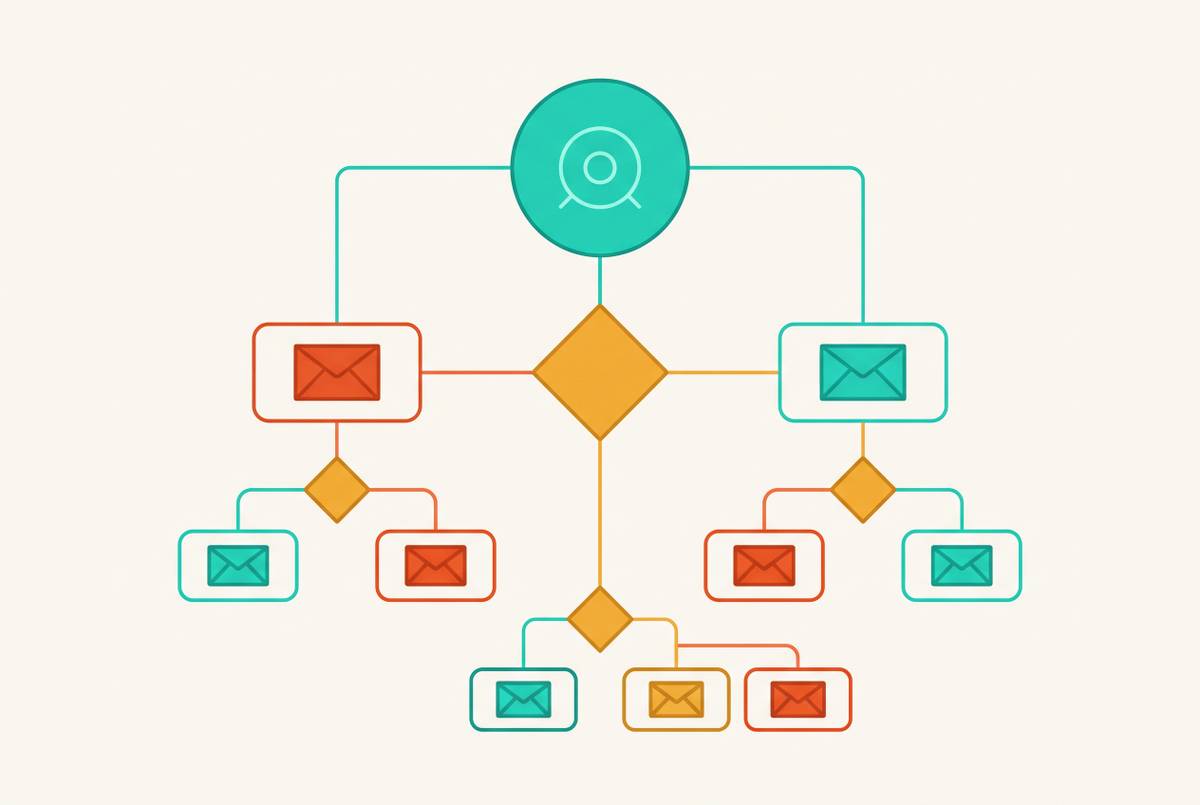
From there, trigger sequences should run off specific behavioral events, not calendar intervals. A pricing page visit should trigger an intent-signal email. A completed onboarding step should trigger a message that goes deeper into a feature the contact just used. If a renewal lapses, that should trigger a re-engagement sequence calibrated against that contact's own engagement baseline, not a blanket threshold applied to the whole list. Content should match the buying committee role receiving it within the same account: the economic buyer needs ROI and cost-justification framing, the technical evaluator needs integration and security depth, the daily user needs workflow and efficiency content. Firmographic data supplies the role context here, and behavioral data supplies the timing, which is just what the earlier layers of the stack were built to produce.
AI-assisted subject line testing and content variation are compressing how fast this optimization cycle runs, and you can already see the gap in click-through and conversion numbers between teams that use these tools and teams still testing by hand. What gets measured should reflect real buying behavior rather than vanity signals: email-attributed pipeline, revenue per recipient, click-through rate, complaint rate, and conversion rate, not open rate, which privacy pre-fetching has made unreliable, and not raw click volume, which bot activity can inflate without reflecting a single real buyer.
How consistently a company's content and information appear across its website, directories, and owned channels now shapes whether AI systems surface that company during a buyer's research, well before any email gets opened. AI has become the first reader of a lot of B2B content, inside the inbox and outside it, and the same structural clarity that helps an inbox parse and render a message correctly is what helps an AI discovery tool represent a brand accurately to a buyer who hasn't yet made contact. Building the trigger logic, measuring the signals that actually reflect buying behavior, and treating that AI-perception layer as part of a brand's overall signal quality, rather than a separate project, is what a behavioral email program built for the years ahead actually looks like in practice.